Things to Do in Kathmandu — A Local Guide to Nepal’s Capital – Kathmandu is not a city that reveals itself all at once.
Your first impression might be the traffic, the noise, the narrow streets and the constant movement of people. But give Kathmandu a little time and you begin to notice something else. A small shrine tucked between two shops. An old brick courtyard behind a narrow doorway. Someone turning a prayer wheel. The smell of incense coming from a temple. A group of children playing beside a centuries-old monument.
This is Kathmandu. It is an old city living a very modern life, and some of its most interesting places are not necessarily the ones you came to see. If this is your first visit to Nepal, you will probably want to see the famous places – Swayambhunath, Pashupatinath, Boudhanath and the historic Durbar Squares. You should. They are famous for good reason.
But don’t stop there. Walk a little further. Take a wrong turn. Sit down for a cup of tea. Look inside an old courtyard when a doorway happens to be open. Watch people going about their daily lives. The real pleasure of Kathmandu is leaving enough time to wander.
Before You Start Exploring Kathmandu
Kathmandu is often used to describe the whole Kathmandu Valley, but technically the valley is much larger than the city itself. The historic heart of the valley includes three old cities – Kathmandu, Patan and Bhaktapur – along with many smaller towns, villages, religious sites and traditional Newar settlements. They are close enough to visit on the same trip, but each has its own character. That is one reason I would not recommend trying to see everything in a single day. Kathmandu itself can keep you occupied for several days. Add Patan and Bhaktapur, and you have another couple of days without having to travel far. If you have more time, you can venture towards Kirtipur, Pharping, Bungamati, Khokana, Panauti, Namobuddha or the hills around the valley. There is also another thing worth knowing before you plan your visit.
Kathmandu changes with the calendar.
A temple that you visit on an ordinary morning may be surrounded by thousands of pilgrims during a festival. A quiet old square can become the centre of a procession. Streets can be decorated with lamps and flowers, chariots can appear in places where you did not expect them, and neighbourhoods that seem ordinary suddenly become the centre of a centuries-old celebration. If your travel dates are flexible, it is worth checking what is happening in Kathmandu and the wider valley before you book your trip. You might discover that you are arriving during Indra Jatra, Tihar, Shivaratri, Bisket Jatra, Rato Machindranath Jatra, Buddha Jayanti or one of the many other festivals celebrated throughout the year. For a visitor, this can make the experience very different. You are not simply looking at an old temple or monument. You are seeing the place being used for the purpose for which it was built – people praying, celebrating, making offerings, carrying out rituals and meeting one another. That is when Kathmandu can really come alive.
Start With the Old Kathmandu
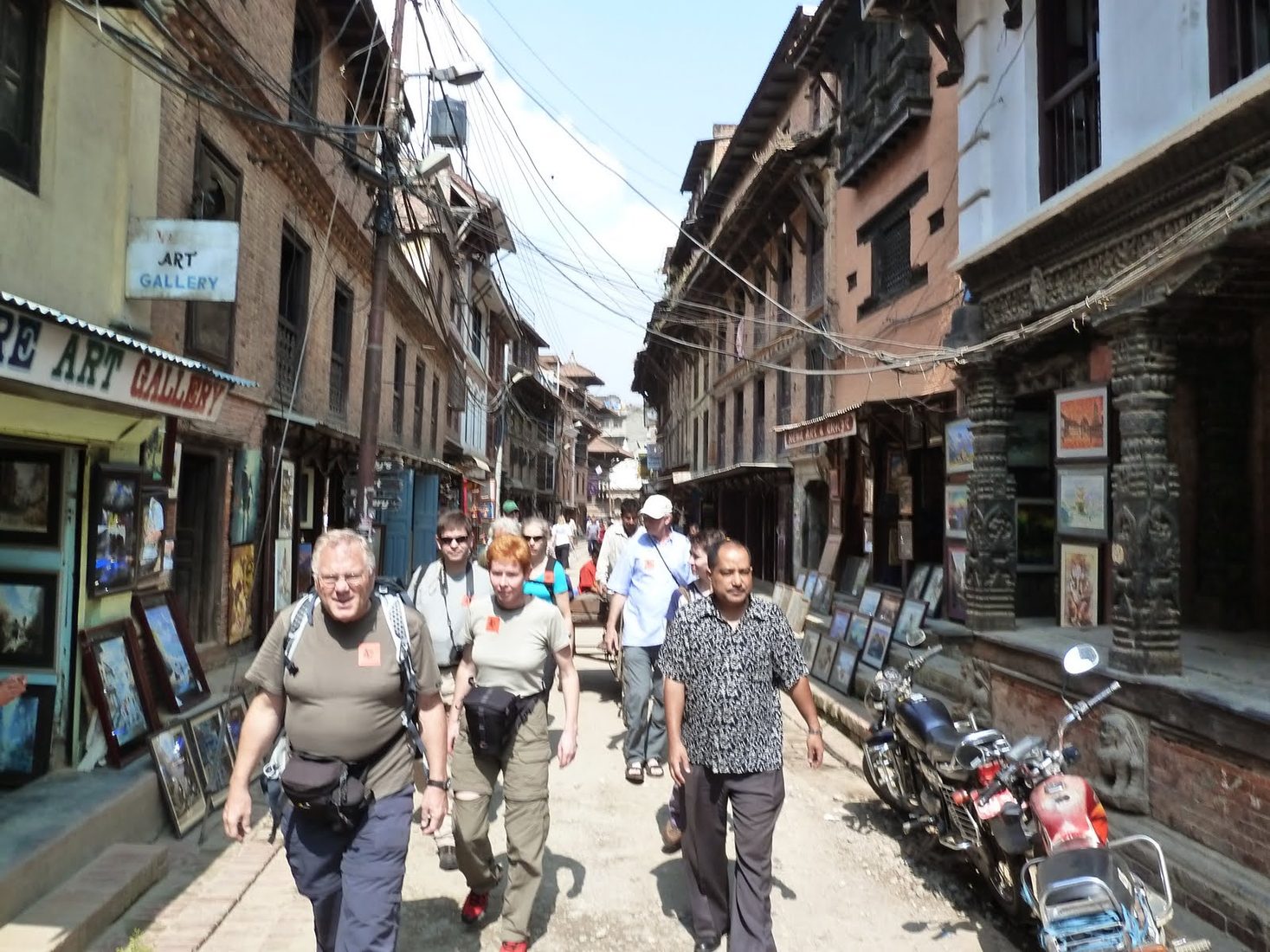
If you have just arrived in Kathmandu, you might be tempted to begin with a list of famous monuments. I would do something slightly different. Start by walking. The old part of Kathmandu is best understood on foot. Begin around Kathmandu Durbar Square and slowly make your way through the surrounding streets towards Ason and Indra Chowk. You don’t need to follow a strict route. The streets are busy, and sometimes you will wonder whether you are going in the right direction. That is part of it. Kathmandu’s old neighbourhoods are full of small details. Traditional brick buildings stand beside newer concrete houses. Tiny shrines appear at street corners. Traders sell spices, vegetables, religious items and everyday goods. People come and go from temples and courtyards as they have done for generations. You may pass a temple without even realising how old it is. Then you turn another corner and find yourself in a quiet bahal – one of the traditional Buddhist courtyards of the valley – just a few minutes from a crowded street. This is why I think walking is one of the best things to do in Kathmandu. You are not simply moving between attractions. You are gradually discovering the city.
Kathmandu Durbar Square
Eventually, you will come back to one of Kathmandu’s great landmarks: Kathmandu Durbar Square. The square was once the political and royal centre of the city, but it is more than a collection of historic buildings. It is part of a living neighbourhood, and people still come here for religious and cultural reasons. Take your time. Look at the carved wooden windows and doors. Notice the temples and courtyards around the square. Watch how local people move through the same spaces that visitors are photographing. And if you happen to visit during a festival, you may see a completely different Durbar Square. This is something worth remembering throughout Kathmandu:
The city you see depends partly on when you arrive. An ordinary street can become a festival route. A temple courtyard can become a place of gathering. A historic square can suddenly be filled with music, processions and people. That is one of the things that makes travelling in Kathmandu different from simply ticking monuments off a list.
Ason and Indra Chowk – Where Kathmandu Gets Busy
From Kathmandu Durbar Square, continue towards Ason and Indra Chowk. This is where you begin to see another side of Kathmandu. There is nothing particularly quiet about these streets. They are busy with people, shops, bicycles, motorcycles, rickshaws and vehicles trying to find their way through spaces that were never designed for today’s traffic. But don’t let the busyness put you off. Ason is one of those places where it is better to walk slowly and look around rather than worry about getting somewhere quickly. The area has long been an important trading centre, and you can still see that in the way people use the streets. Shops sell spices, vegetables, clothes, household goods, religious items and all sorts of things that local people actually buy. There are small temples and shrines tucked into the middle of the activity. You might stop because something catches your eye, or simply because the crowd has stopped you. That’s fine. You are experiencing Kathmandu. Take Your Time Around Indra Chowk. A little further on is Indra Chowk, another busy historic market area.
The name is connected with Indra, the Hindu god associated with rain, and the area becomes particularly important during Indra Jatra, one of Kathmandu’s great annual festivals. At festival time, this part of the old city changes completely. Processions pass through the streets, traditional music fills the area and local people gather to take part in celebrations that have continued for generations. On an ordinary day, however, Indra Chowk is simply part of Kathmandu’s everyday rhythm. This is one of the things I like about the old city. The places you visit are not preserved behind glass. They are still part of people’s daily lives.
If you are interested in photography, Ason and Indra Chowk can also be rewarding. There are plenty of opportunities to photograph architecture, markets, details of everyday life and the movement of the city. But remember that you are walking through people’s neighbourhoods and places of worship. Ask before taking close-up portraits, particularly when photographing people involved in religious activities.
Now Head Towards Swayambhunath
After spending time in the old city, it is worth changing the pace. Make your way towards Swayambhunath, the ancient hilltop Buddhist site overlooking Kathmandu. You can reach it by road, but if you have the time and energy, walking part of the way gives you another perspective on the city. The surroundings gradually change as you leave the busiest market streets behind. Eventually the hill rises in front of you, and the climb begins. There are different ways to reach the stupa, but the traditional staircase is part of the experience. As you climb, you may encounter monkeys, prayer flags, small shrines and people making their way up to the religious complex. The city slowly opens up behind you. And then, after the climb, you reach the stupa.
Swayambhunath – Look Back at Kathmandu
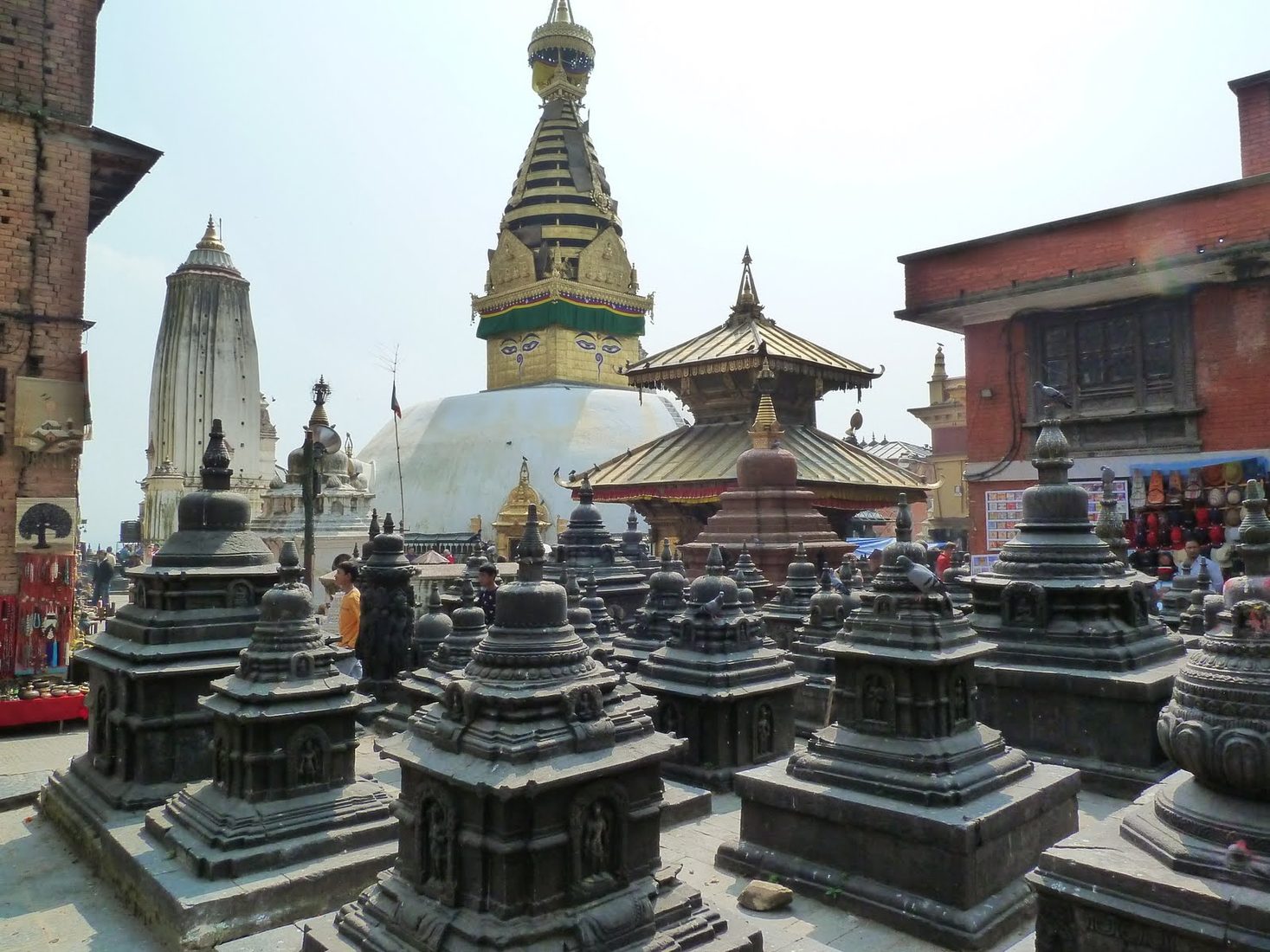
Swayambhunath is often called the Monkey Temple, and the monkeys certainly seem to consider the place their own. But there is much more to the site than its famous residents. The stupa sits on a hill overlooking the Kathmandu Valley and is an important Buddhist pilgrimage site. Around the main stupa are temples, shrines, statues, prayer wheels and other religious structures. Walk around the stupa and watch the people rather than rushing straight to the viewpoint. You will see pilgrims turning prayer wheels, lighting butter lamps, making offerings and walking clockwise around the stupa. This is a place where it is worth sitting for a while. From the hilltop, Kathmandu spreads out below you – dense neighbourhoods, temples, newer buildings and the hills surrounding the valley. On a clear day, you can see much further. It is also a good moment to understand something about Kathmandu. From above, the city can look like one enormous urban area. Down below, however, it is made up of old neighbourhoods, courtyards, temples, monasteries, markets and communities, each with its own history. If you have just spent the morning walking through Ason and Indra Chowk, the view from Swayambhunath gives you a completely different understanding of the same city. And perhaps that is the best way to explore Kathmandu – see it from above, walk through it from below, and give yourself enough time to notice the things in between. In the next blog I will take you to Pashupatinath, Patan and other interesting places.
For a better experience while you are in Nepal, explore these places on foot with one of our trusted local guides. Walking gives you a chance to see more than the usual sights – the small streets, local markets, courtyards, temples and everyday life that you might otherwise miss. If you are a photographer, even better. Our guides know the city well and can take you into every little corner, helping you find the people, places and moments that make Kathmandu special. Write to us and let us arrange a walking experience around your interests. The next blog will tell you about Pashupatinath and Boudanath and more.