Nepal Festivals Guide: Dashain to Bibaha Panchami: From Dashain and Tihar to Kartik Naach, Chhath and Bibaha Panchami – Autumn Festival
From family blessings during Dashain to the lamps of Tihar, the ancient dances of Patan, the sunrise prayers of Chhath and the sacred wedding celebration in Janakpur, Nepal’s festival season reveals a side of the country that goes far beyond its mountains.
If you visit Nepal in autumn, you may arrive expecting mountain views, traditional villages and historic temples. But there is another experience waiting for you: a season when the country comes alive with festivals, family gatherings, religious ceremonies, music, lights and centuries-old traditions.
It begins with Dashain, Nepal’s most widely celebrated Hindu festival. Soon afterwards, Tihar fills homes and streets with lamps and flower garlands. In Patan, the historic city of Lalitpur, the extraordinary Kartik Naach brings stories of Hindu mythology to life through traditional dance and drama. Around the same period, Chhath draws families to rivers and ponds to offer prayers to the setting and rising sun. Later in the season, Janakpur becomes the centre of Bibaha Panchami, celebrating the divine marriage of Sita and Ram.
These celebrations are not simply events to watch. They reflect the values, beliefs, family relationships and cultural identities that continue to shape life in Nepal.
For travellers interested in history, photography, spirituality and local life, this is one of the most fascinating times to explore the country.
1. Dashain: Nepal’s Great Festival of Family and Blessings
Dashain is one of Nepal’s most important annual celebrations. Observed over approximately two weeks, it honours Goddess Durga and commemorates the triumph of good over evil. For many Nepali families, it is also the most important time of the year to reunite with relatives.
The festival usually falls in September or October, after the monsoon season. Villages, towns and cities take on a different atmosphere as people prepare their homes, shop for new clothes, travel to their ancestral villages and make arrangements to welcome family members.
Ghatasthapana: The beginning of Dashain
Dashain begins with Ghatasthapana, when a sacred vessel is established in the home or place of worship and barley seeds are planted in a prepared bed of soil. The seedlings, known as jamara, grow during the festival and are later used as part of the Dashain tika blessing.
The day marks the beginning of Navaratri, a period of worship dedicated to the Goddess. Families maintain the ritual space and offer prayers throughout the coming days.
For visitors, this is a reminder that Dashain is not just one public holiday. Its meaning develops through a series of rituals, each with its own place in the celebration.
Phulpati: A day of ceremonial importance
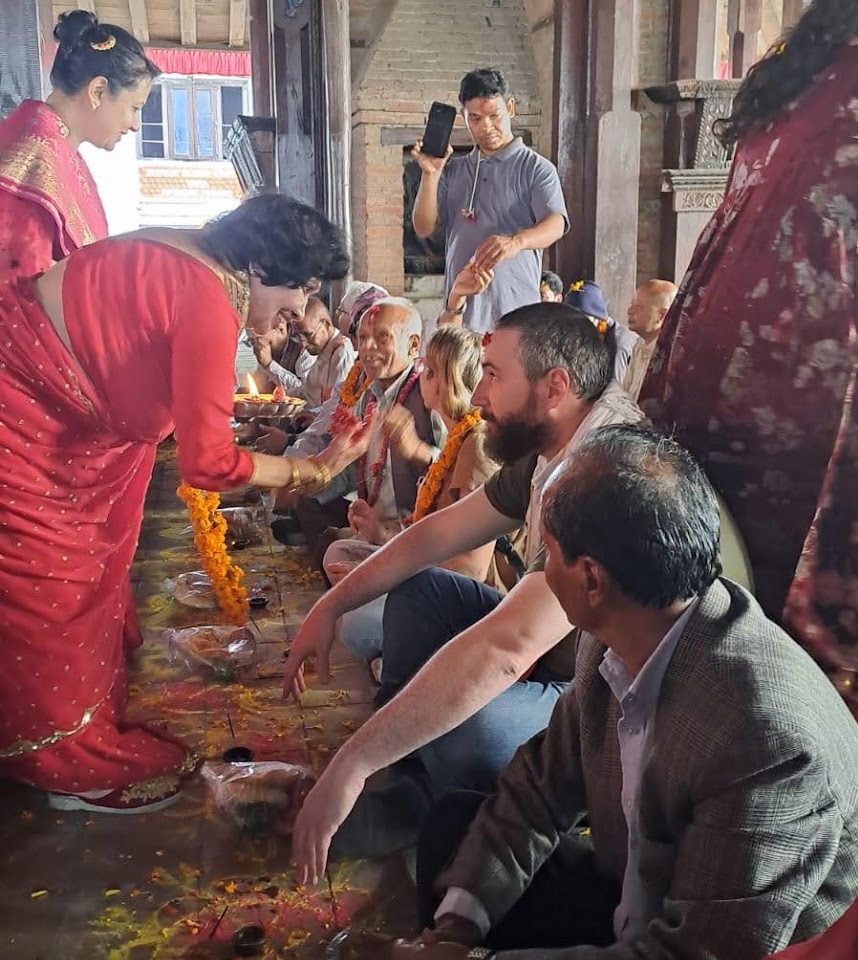
Phulpati is one of the major days of Dashain. Traditionally, sacred plants, flowers and other auspicious items are brought into homes and places of worship. Ceremonies associated with the day have also been held at the national level.
Across the country, preparations intensify. Families begin to gather, markets become busier and the sense of anticipation grows as the main days approach.
Maha Ashtami: Worship of the Goddess
Maha Ashtami is dedicated to Goddess Durga in one of her powerful forms. Devotees visit temples, perform puja and make offerings. In some Hindu traditions, animal sacrifice is part of the observance, while other devotees follow different forms of worship.
The rituals express faith in the Goddess as a protector and a force that overcomes destructive powers.
Maha Navami: The ninth day
Maha Navami is another important day of worship. Temples and household shrines receive offerings, and some communities conduct rituals associated with tools, vehicles and working equipment.
The day is connected with the belief that divine protection and strength can support people in their daily lives. It also prepares the way for the festival’s best-known celebration: Vijaya Dashami.
Vijaya Dashami: Tika, jamara and family blessings
Vijaya Dashami is the day when many Nepalis receive tika and jamara from their elders. Red tika, often made with rice, yoghurt and vermilion, is placed on the forehead, while jamara is tucked into the hair or worn as a blessing. Elders offer prayers and wishes for health, happiness, success and a long life.
Families visit parents, grandparents and relatives. New clothes, traditional food, gifts and shared meals are all part of the celebration. In many homes, younger family members travel considerable distances to receive blessings from their elders.
Dashain also has a wider social meaning. For many people, it is a time to put aside everyday pressures, reconnect with family and remember their roots.
What does Dashain mean for Nepal?
Dashain brings together religious devotion, family life and national tradition. It is celebrated across many communities, although customs differ between ethnic groups, regions and households. Newar communities, for example, have their own related traditions associated with Mohani.
For travellers, Dashain offers a chance to understand Nepal through its people rather than only through its famous sights. However, it is important to plan carefully. Many Nepalis travel home, and some businesses, transport services and tourist facilities may operate on reduced schedules during the main holidays.
Photography opportunity: The most meaningful images are often found in family settings, temple courtyards, traditional markets and the details of jamara, tika and festival preparations. Always ask permission before photographing private religious ceremonies or family members. See our Kathmandu Highlight Tour
2. Tihar and Deepawali: Five Days of Lights, Animals and Family Bonds
After Dashain, Nepal prepares for another much-loved celebration: Tihar, also widely known as Deepawali or the festival of lights.
Tihar is generally observed over five days, although the exact sequence and local customs can vary. It honours crows, dogs, cows and oxen on different days, includes worship of Goddess Laxmi, and ends with Bhai Tika, a celebration of the relationship between brothers and sisters.
Unlike Dashain, which centres strongly on family reunions and blessings, Tihar is especially recognised for its lights, flower garlands, colourful decorations and intimate household rituals.
Day 1: Kaag Tihar — Worship of the crow
The first day is dedicated to the crow, which is associated in Hindu tradition with messages and with Yama, the god of death. Families place food outside for crows as a gesture of respect and an appeal for good fortune.
The ritual may seem unusual to visitors unfamiliar with Nepali customs. Yet it reflects a broader theme found throughout Tihar: animals are not treated simply as part of the background of human life but are given a place in religious and cultural practice.
Day 2: Kukur Tihar — A day for dogs
Kukur Tihar is one of the most recognisable days of the festival. Dogs receive flower garlands, tika and special food in recognition of their loyalty and their association with protection and the afterlife.
Pet dogs are celebrated at home, while community dogs may also receive offerings. In Nepal, photographs of dogs wearing marigold garlands have become familiar images of the season.
For travellers, it is a lovely example of how a religious festival can express affection for animals in a very visible way.
Day 3: Gai Tihar and Laxmi Puja — Welcoming prosperity
The third day is especially important in many communities. Cows are honoured in the morning, while the evening is dedicated to Goddess Laxmi, associated with wealth, prosperity and good fortune.
Families clean their homes, decorate doorways and windows, arrange flowers and light oil lamps or electric lights. Many create rangoli designs or draw symbolic footprints leading towards the entrance, welcoming the Goddess into the home.
As darkness falls, streets and neighbourhoods begin to glow. Shopfronts, courtyards and balconies are decorated, and the city takes on a festive atmosphere.
In Kathmandu and Lalitpur, the combination of traditional architecture, lamps, marigold garlands and illuminated windows creates particularly attractive scenes for photographers.
Day 4: Govardhan Puja, Goru Tihar and Mha Puja
The fourth day has different meanings across Nepal’s communities.
In many Hindu households, Govardhan Puja honours Govardhan Hill and the story of Krishna protecting people and cattle. Oxen are also worshipped in traditions connected with their role in agriculture.
Among Newar communities, this day is especially associated with Mha Puja, a ritual of honouring and purifying the self. It is also linked with the celebration of Nepal Sambat, the traditional lunar calendar of the Newar community.
Mha Puja is an important reminder that Nepal’s festival season includes traditions that are distinct from, yet connected to, the wider celebrations of the country.
Day 5: Bhai Tika — Celebrating brothers and sisters
Tihar concludes with Bhai Tika. Sisters apply tika to their brothers, offer garlands and prayers, and wish them a long and prosperous life. Brothers give gifts and blessings in return.
The ritual celebrates family bonds and mutual care. In many households, the day includes a special meal, sweets and visits between relatives.
Traditional Tihar songs, including Deusi and Bhailo, are another highlight. Groups visit homes to sing, perform and exchange blessings, often receiving food or money in return. The songs bring music and a strong sense of community into the evenings.
Why is Tihar special for visitors?
Tihar makes Nepal’s towns and cities particularly beautiful after dark. The combination of lamps, flower garlands, rangoli and historic architecture creates scenes that are both colourful and deeply personal.
It is also an excellent time to see the relationship between Nepal’s religious traditions and ordinary domestic life. A decorated doorway or a family gathered around an oil lamp may tell a more personal story than a grand public ceremony.
Photography opportunity: Look for marigold garlands, oil lamps, illuminated courtyards, rangoli patterns and the traditional architecture of the Kathmandu Valley. Photograph people and their rituals respectfully, and avoid blocking doorways or interrupting prayers.
Visitors should also be aware that some shops and services may close or change their hours during the main festival days. See our Kathmandu Heritage tour
3. Kartik Naach: Patan’s Living Heritage of Dance and Drama
While the wider festival season moves from Tihar towards Chhath, Patan has another cultural tradition worth planning around: Kartik Naach.
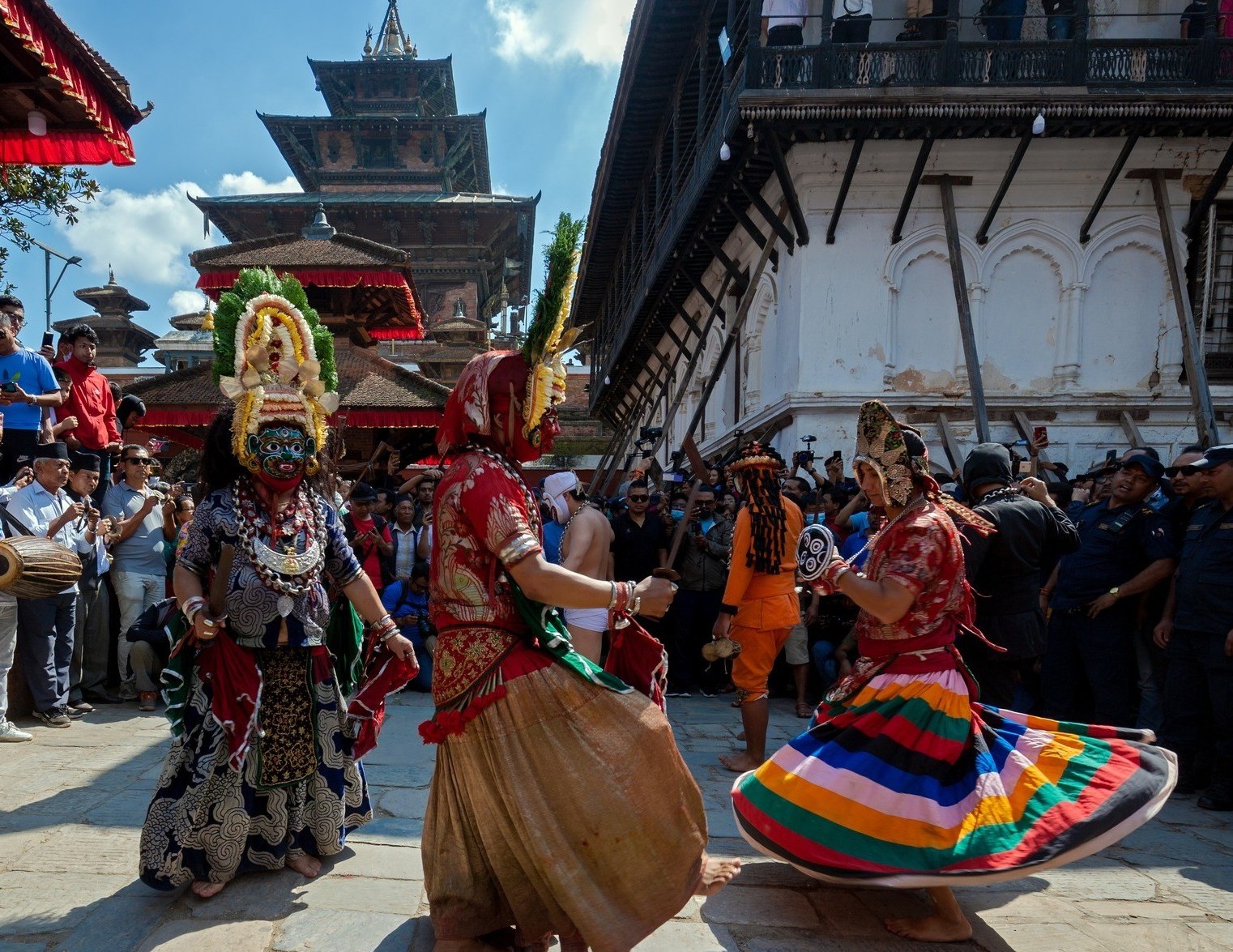
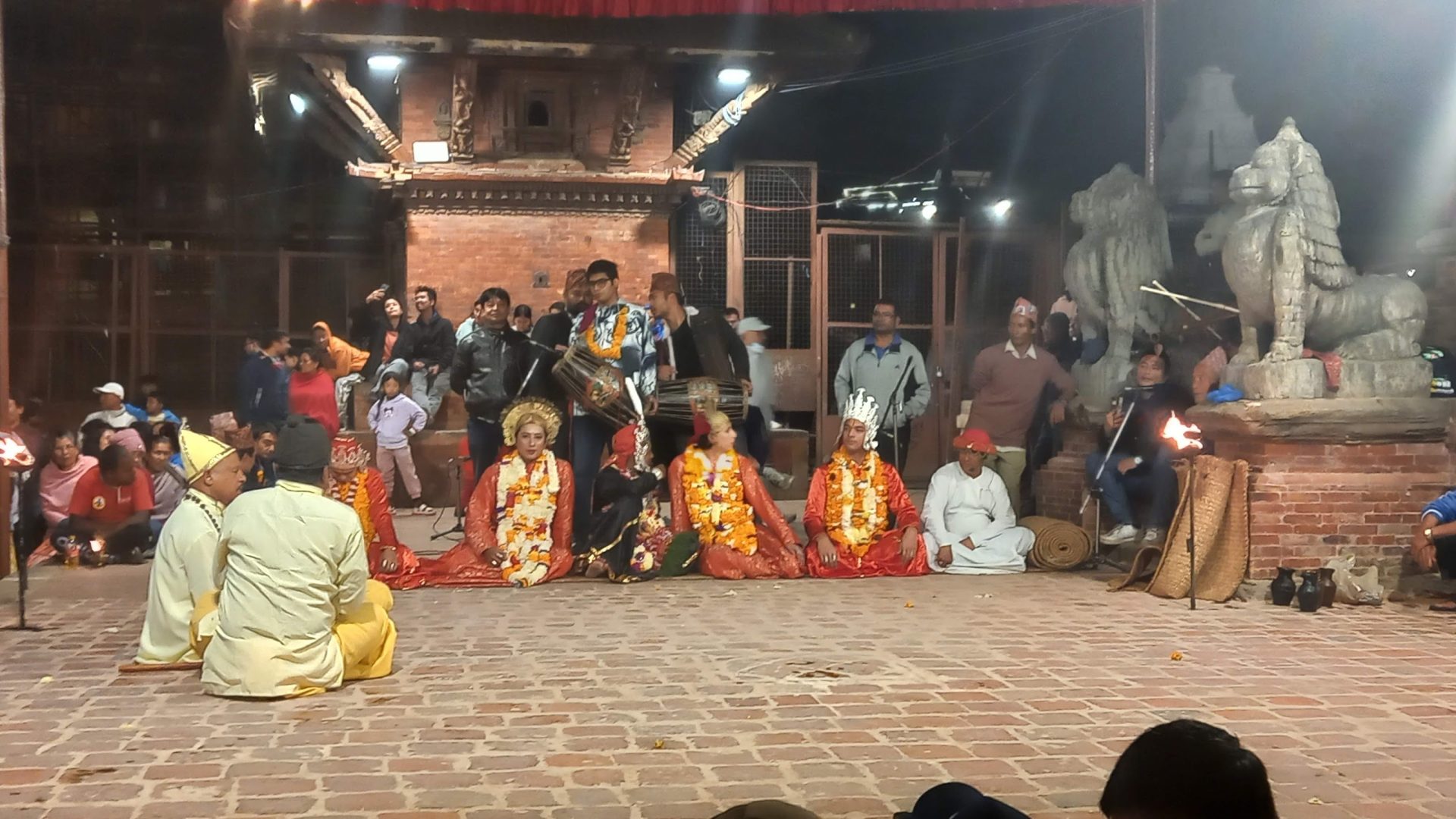
Performed at Kartik Dabali in Patan Durbar Square, Lalitpur, Kartik Naach is a historic dance and theatrical tradition dating back to the seventeenth century. It is associated with King Siddhi Narasingh Malla and presents stories from Hindu religious and mythological traditions, particularly those connected with Lord Vishnu.
The performances combine dance, music, costumes, masks and dramatic storytelling. Rather than being a single show, the tradition unfolds through different episodes, with the programme and duration varying by year.
Why was Kartik Naach established?
Kartik Naach is generally understood as a tradition created to promote religious values and communicate stories to the community through performance. Over time, it developed into an important part of Patan’s cultural identity.
Stories of Vishnu and his various forms explore the struggle between good and evil, devotion, pride, justice and the restoration of balance. One especially memorable episode concerns Narasimha, Vishnu’s half-man, half-lion incarnation, and the defeat of the demon king Hiranyakashipu.
These are not simply stories preserved in books. During Kartik Naach, they are presented through live performance in a historic public space, allowing audiences to experience them as part of a continuing tradition.
What happens during Kartik Naach?
Performers appear in elaborate costumes and traditional makeup, accompanied by music and movement. Each performance tells a story, and spectators gather around the performance area to watch.
The atmosphere is different from a modern theatre. The setting is an open courtyard in a historic city, and the audience includes local residents who may have grown up watching these performances. Their familiarity with the stories adds another layer to the experience.
The programme can last several days, depending on the year’s schedule. Some performances attract particularly large audiences, so it is worth checking local announcements before planning a visit.
What does Kartik Naach mean for Nepal?
Kartik Naach is an example of living heritage. Its importance lies not only in its age but also in the people who continue to organise, perform and watch it.
Traditions such as this help preserve music, costume-making, performance skills, storytelling and community knowledge. They also show how the historic squares of the Kathmandu Valley continue to serve as places for living culture rather than merely monuments for visitors.
For anyone interested in Newar heritage, traditional performance or the history of the Kathmandu Valley, Kartik Naach is a particularly rewarding experience.
Why is Kartik Naach a photographer’s opportunity?
Few cultural settings combine historic architecture, traditional costume, theatrical lighting and a local audience in quite the same way.
The performers’ costumes and makeup offer striking details. The surrounding temples, carved windows and brick courtyards provide a strong architectural background. As evening approaches, the contrast between the performance area and the surrounding square can be especially atmospheric.
However, good photography requires patience. The most compelling images often come from observing how performers move, how musicians support the scene and how the audience responds.
A few practical considerations:
- Check the performance schedule before travelling to Patan.
- Arrive early to find a suitable viewing position.
- Ask before photographing performers at close range, and follow any restrictions announced by organisers.
- Use a camera setting suitable for low light, as flash may distract performers and spectators.
- Allow time to explore Patan Durbar Square and its surrounding lanes before or after the performance.
For travellers: Kartik Naach can be combined with a walking tour of Patan’s historic squares, courtyards, temples and traditional neighbourhoods. This allows visitors to appreciate both the performance and the wider heritage of Lalitpur.
4. Chhath: Four Days of Devotion to the Sun
Chhath is one of Nepal’s most visually distinctive religious celebrations, particularly in the Terai and Madhesh regions. It honours Surya, the Sun God, and Chhathi Maiya, and is observed with great devotion among Maithili, Bhojpuri, Tharu and other communities.
The festival is also celebrated in Kathmandu and other parts of Nepal, where families gather at rivers, ponds and specially prepared water sites.
Chhath is different from many other festivals because its central rituals take place outdoors, beside water, in direct connection with the setting and rising sun.
The main observance lasts four days, with each day preparing devotees for the two important offerings at sunset and sunrise.
Day 1: Nahay Khay — Purification and preparation
Nahay Khay marks the beginning of the festival. Devotees bathe, clean their homes and prepare a simple, pure meal. Foods often include rice, lentils and bottle gourd, though customs vary between households and regions.
Cleanliness is central to the observance. Families prepare the kitchen, utensils and ingredients carefully because the food offered during Chhath is treated with particular respect.
This first day establishes the spirit of discipline and devotion that continues through the festival.
Day 2: Kharna — Fasting and the evening offering
On Kharna, devotees observe a fast during the day and prepare a special meal in the evening. Common offerings include rice pudding made with milk and jaggery, along with roti or other traditional foods.
The food is first offered as prasad and then shared with family and others. After this ritual meal, those observing the strict fast begin the next phase of the observance.
The preparation of food is an important part of Chhath. Families work together, and traditional sweets such as thekua are prepared for the offerings to come.
Day 3: Sandhya Arghya — Prayers to the setting sun
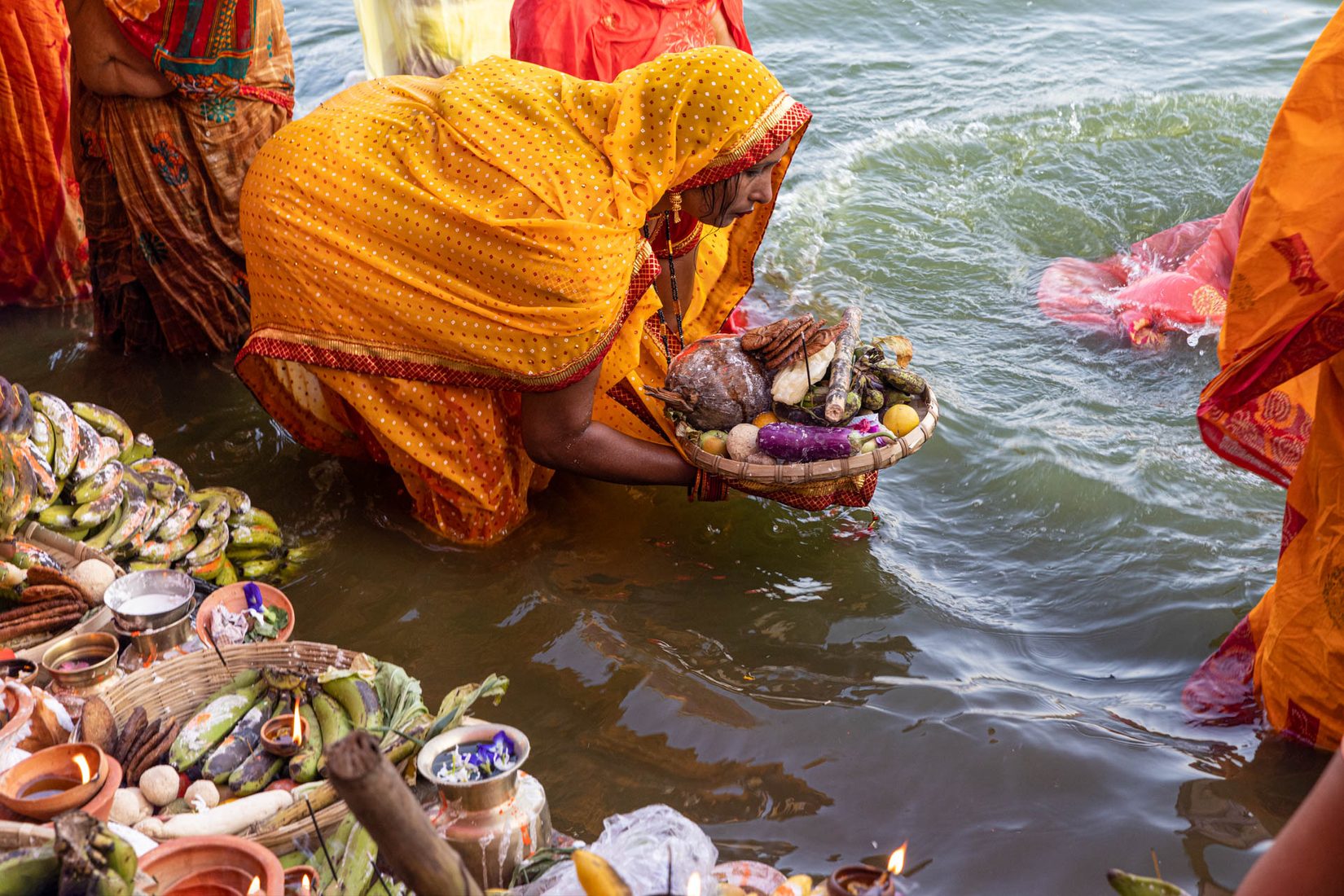
The third day is one of the most memorable moments of Chhath. In the afternoon, families carry baskets of fruit, sugarcane, thekua and other offerings to a riverbank or pond.
The baskets are often made from bamboo, and the offerings are arranged carefully. Relatives accompany the devotees, and traditional songs are sung as the gathering moves towards the water.
At sunset, devotees stand in the water and offer arghya to the setting sun. The ritual expresses gratitude for life, health, nature and the energy that sustains the world.
The sight of families standing in the water, holding offerings against the evening sky, is central to the festival’s visual identity.
Day 4: Usha Arghya — Welcoming the rising sun
Before dawn, devotees return to the water for the final offering. The gathering takes place while the sky is still dark, gradually changing colour as morning approaches.
At sunrise, offerings are made to the rising sun. The ritual concludes the observance, and those who have been fasting complete their fast according to their tradition.
The two sun offerings are significant: devotees honour both the setting sun and the rising sun, recognising the cycles of nature and expressing gratitude for life and renewal.
What does Chhath mean for Nepal?
Chhath is an important expression of the cultural identity of the Madhesh and Terai. It brings families and neighbourhoods together, strengthens community relationships and preserves traditional songs, foods and ritual practices.
The festival also demonstrates the diversity of Nepal. The country is home to many cultural and religious traditions, and Chhath offers a chance to appreciate communities whose customs may be less familiar to visitors who spend most of their time in the mountains or Kathmandu Valley.
Why is Chhath such a photographic occasion?
Chhath is especially beautiful because its rituals take place in natural light. The warm colours of sunset, the reflections on the water, the silhouettes of devotees and the first light of dawn create scenes that are difficult to reproduce in any other setting.
The bamboo baskets, fruit, sugarcane, traditional clothing and lamps add detail, while the water and open sky create a sense of space.
For photographers, the most rewarding moments may be the quiet ones: a family preparing offerings, a devotee waiting patiently for sunrise or the reflection of the first light across a river.
Photography should always be respectful. Chhath is a deeply personal act of devotion, and not every participant will welcome close-up photographs. Ask permission when appropriate and follow local guidance.
Travellers wishing to witness Chhath should plan ahead, as access to popular ghats may be busy and local arrangements can change. A knowledgeable local guide can help visitors understand what is happening without disturbing the ceremony. Plan with us if you wish to visit this place.
5. Bibaha Panchami: Celebrating the Wedding of Sita and Ram in Janakpur
Later in the season comes Bibaha Panchami, one of the most important religious celebrations in Janakpur, in Nepal’s Madhesh Province.
The festival commemorates the divine marriage of Sita and Ram, whose story is central to the Ramayana. Janakpur is traditionally identified with the ancient kingdom of Mithila, ruled by King Janak, Sita’s father. For this reason, the city holds a special place in the religious imagination of many Hindus.
Bibaha Panchami attracts pilgrims from Nepal and India, along with visitors interested in Hindu traditions, Mithila culture and the history of Janakpur.
The story behind Bibaha Panchami
According to the Ramayana tradition, Sita was the daughter of King Janak. When the time came for her marriage, a contest was arranged involving the great bow associated with Lord Shiva.
Ram, the prince of Ayodhya, succeeded in lifting and breaking the bow, demonstrating his extraordinary strength and fulfilling the condition for marrying Sita.
Their marriage became a lasting symbol of devotion, duty, virtue and the ideal partnership. Bibaha Panchami commemorates this sacred union and connects the story to Janakpur, the city associated with Sita’s birthplace.
How is Bibaha Panchami celebrated?
The celebrations centre on Janaki Mandir, the magnificent temple dedicated to Sita. During the festival, the temple and surrounding areas become gathering places for worshippers, religious ceremonies and processions.
The celebrations may include the ceremonial presentation of Ram and Sita as bride and groom, wedding rituals, devotional singing and enactments of episodes from the Ramayana. Pilgrims come to offer prayers and take part in the festivities.
The programme can extend across several days, with the main observance falling on the fifth day of the bright lunar fortnight in the month of Mangsir. The exact Gregorian date changes each year.
For many devotees, visiting Janakpur at this time is a way of connecting with the story of Sita and Ram in the very place where tradition locates their marriage.
What does Bibaha Panchami mean for Nepal?
Bibaha Panchami is significant for both religious and cultural reasons. It strengthens Janakpur’s identity as a major pilgrimage destination and highlights the heritage of the Mithila region.
The festival also brings attention to Mithila’s art, language, music, food and distinctive cultural traditions. Janakpur is known for its colourful visual culture, including Mithila painting, which often draws on religious stories, nature and daily life.
For Nepal, Bibaha Panchami is another example of how different regions contribute to the country’s cultural richness. The Kathmandu Valley’s historic courtyards and Patan’s traditional performances are only part of the picture; Janakpur offers a different architectural, linguistic and devotional experience.
Why is Bibaha Panchami a photographer’s opportunity?
Janaki Mandir is one of Nepal’s most distinctive temple buildings. Its ornate façades, arches, domes and decorative details provide a striking setting for festival photography.
During Bibaha Panchami, the temple area can become especially lively, with pilgrims, ceremonial decorations, religious processions and traditional clothing adding colour and movement to the scene.
The strongest photographs often combine the temple’s architecture with the human story unfolding around it. A wider view can show the scale of the gathering, while closer images can capture the detail of decorations, offerings and Mithila cultural elements.
As with all religious festivals, visitors should be aware that some spaces are reserved for worship. Follow temple rules, ask before photographing individuals and avoid obstructing pilgrims.
Planning a visit to Janakpur
Janakpur is worth more than a brief stop on the way to another destination. Travellers can explore Janaki Mandir, learn about Mithila culture, visit local markets and experience the city’s distinctive food and everyday life.
During Bibaha Panchami, accommodation and transport may be in greater demand, so advance planning is sensible. Visitors should also allow flexibility for crowds and changes to ceremonial schedules.
6. Why Autumn Is Such a Special Time to Experience Nepal
Taken together, Dashain, Tihar, Kartik Naach, Chhath and Bibaha Panchami reveal how much Nepal has to offer beyond trekking and mountain scenery.
Each festival offers a different experience.
Dashain opens a window into family relationships, blessings and religious devotion. Tihar brings light, music and the celebration of animals and siblings into homes and neighbourhoods. Kartik Naach preserves centuries-old performance traditions in Patan. Chhath connects people directly with the sun, water and the rhythms of nature. Bibaha Panchami brings the sacred story of Sita and Ram to life in Janakpur.
These celebrations also offer a chance to travel more thoughtfully. Instead of moving quickly from one attraction to another, visitors can spend time in a neighbourhood, observe a ceremony, learn from a local guide and understand why a particular tradition matters to the people who maintain it.
Autumn is generally a popular season for travel in Nepal, but festival experiences require a little extra planning. Dates change according to the lunar calendar, public transport and business schedules can be affected by holidays, and large gatherings may require visitors to adjust their plans.
For photographers, the opportunities are exceptional: marigold garlands, oil lamps, historic squares, traditional costumes, river reflections, temple architecture and the colours of Mithila culture. Yet the best photographs are not always the most dramatic. Often, they are the images that capture a moment of genuine human connection.
Experience Nepal Beyond the Usual Journey
At Red Reach Himalaya, we believe a journey should fit the traveller, not the other way around.
Some visitors come to Nepal for trekking and the Himalayas. Others want to discover the country’s living heritage, visit sacred places, photograph traditional festivals, explore historic towns or spend time learning about local life.
These interests can be combined into a journey that makes sense for your schedule and travel style. A few days in the Kathmandu Valley could include the heritage of Patan and, when the dates align, Kartik Naach. A longer cultural itinerary could continue to Janakpur for Mithila traditions and Bibaha Panchami, or explore other parts of Nepal at a more relaxed pace.
Festival dates are not fixed to the same Gregorian dates every year, so planning around them requires care. We recommend confirming the local programme and allowing enough time to experience each place without rushing.
If you are considering Nepal in autumn, tell us what you would like to experience. We can help you build a journey around your interests, whether that means cultural discovery, pilgrimage, photography, trekking or a combination of experiences.
Nepal has many stories to share. The festival season is one of the best ways to begin discovering them.
Plan a personal Nepal journey with Red Reach Himalaya.
Plan with us and write to us. Festival dates, schedules and local practices can change each year. Confirm the relevant year’s Nepali calendar and local arrangements before finalising travel plans.