Long Treks in Nepal: Preparation, Safety and What to Do When Things Go Wrong
A long trek in Nepal is about much more than reaching Everest Base Camp, crossing a high mountain pass or standing beneath an eight-thousand-metre peak. It is about the journey itself: walking through mountain villages, meeting local people, discovering unfamiliar cultures and experiencing landscapes that change with every day on the trail.
But trekking for ten days, two weeks or longer also brings challenges that are easy to underestimate when planning from home. Sore feet, cold nights, flight delays, altitude problems and unexpected changes in personal circumstances can all affect your journey.
The good news is that many difficulties can be anticipated. You do not need to be an elite athlete or carry the most expensive equipment. You need realistic preparation, a sensible itinerary, an understanding of mountain conditions and the willingness to change your plans when necessary.
At Red Reach Himalaya, we believe a successful trek is not simply about reaching a destination. It is about making the journey safely, comfortably and in a way that suits you.
Here are some practical things to consider before setting out on a long Himalayan trek in Nepal.
1. The Small Details That Make a Big Difference
When preparing for a trek, people naturally concentrate on major expenses such as flights, accommodation, trekking permits, sleeping bags and down jackets. Yet small oversights can become surprisingly troublesome after several days of walking.
Break in your trekking boots
New boots can cause friction, blisters and discomfort, especially during long descents. Wear your boots on regular walks before leaving home, preferably on uneven ground and with the socks you intend to use on the trek.
Carry blister dressings, suitable tape and a small foot-care kit in your daypack rather than in luggage carried by a porter. If you notice a hot spot developing, stop and deal with it before the skin breaks.
Keep your toenails short before departure. Properly fitted boots, suitable socks and careful foot care can make a considerable difference over two or three weeks of walking.
Protect your batteries from the cold
Cold temperatures can temporarily reduce the performance of phone, camera and power-bank batteries. This becomes particularly noticeable during cold mornings and nights at higher elevations.
Keep spare batteries in an insulated pocket, carry a suitable power bank and recharge devices whenever practical. At night, store vulnerable electronics somewhere warm and dry, following the manufacturer’s safety instructions.
A headlamp with spare batteries is particularly useful when leaving early, walking after sunset or moving around an unlit teahouse.
Plan for safe drinking water
Safe drinking water is essential throughout a long trek. Water from mountain streams, village taps and other untreated sources can contain organisms that cause gastrointestinal illness.
Use an appropriate purification method, such as a suitable filter, chemical treatment or boiling. Some filters do not remove viruses, and different treatments have different limitations, so check that your method is appropriate for the water source.
Carry a reusable bottle or hydration system and know where you can refill it. Drink regularly throughout the day, adjusting your intake to your activity, conditions and personal needs. Avoid forcing excessive quantities of water.
Staying hydrated supports general wellbeing, but drinking extra water does not prevent acute mountain sickness.
Carry your everyday essentials yourself
Your main duffel may be carried by a porter, but your daypack should contain the items you need during the day’s walk.
These usually include:
- Water and any required purification supplies.
- Rain jacket and an additional warm layer.
- Sunscreen, sunglasses and a sun hat.
- Headlamp, personal medication and basic first-aid supplies.
- Snacks, identification and some cash.
- Phone, power bank and emergency contact details.
The precise list depends on the route, season and services available along the trail.
Carry enough Nepalese rupees
Kathmandu and larger towns offer banking services and digital payment options, but these cannot be relied upon throughout remote trekking regions. ATMs may be unavailable, out of cash or affected by power and connectivity problems.
Carry enough Nepalese rupees for planned personal expenses, including drinks, snacks, showers, device charging, Wi-Fi and tips where applicable. Keep some money separately as a reserve.
Before departure, ask your trekking operator which expenses are included in your package and which you should budget for yourself.
2. What Are the Rewards and Realities of a Long Trek?
Spending more time in the mountains allows you to experience Nepal at a different pace. However, it also means accepting some practical limitations.
The rewards
- More time to experience mountain scenery rather than rushing between destinations.
- Opportunities to visit traditional villages, monasteries and local communities.
- A chance to develop friendships with fellow trekkers, guides and porters.
- Time to observe changes in landscapes, vegetation, architecture and local life.
- A welcome break from everyday routines and constant digital distractions.
The realities
- Basic accommodation and limited privacy in some mountain lodges.
- Cold rooms, shared bathrooms and variable hot-water availability.
- Repetitive menus and fewer food choices at higher elevations.
- Long walking days, steep descents and cumulative fatigue.
- Weather-related delays, landslides, trail damage and changes to transport arrangements.
Accommodation standards vary considerably by region and route. Some popular trails have comfortable lodges, while remote areas offer much simpler facilities.
Choose your trek according to your interests, available time and expectations rather than assuming that every Himalayan route provides the same level of comfort.
3. Prepare Your Body Before Leaving Home
You do not need to be a competitive runner to enjoy trekking in Nepal. You do, however, need enough endurance to walk for several hours on consecutive days.
If possible, begin preparing three or four months before departure, particularly if you have a sedentary routine.
Build walking endurance
Start with regular walks and gradually increase the distance, duration and elevation gain. Include hills and uneven ground when possible. Longer practice walks can help you understand how your feet, knees and shoulders respond to sustained activity.
Cycling, swimming and other cardiovascular exercise can complement your walking programme.
Strengthen your legs
Step-ups, lunges, squats and controlled downhill practice can help develop the strength needed for uneven trails and long descents.
If you are new to exercise or have an existing medical condition, seek appropriate professional guidance before beginning a demanding training programme.
Practise carrying a daypack
Walk with a pack similar in weight to the one you expect to carry in Nepal. This helps you assess its fit and identify discomfort before the trek begins.
You should not need to carry your entire expedition load on your back when trekking with porter support, but your daypack still needs to be comfortable.
Remember that fitness does not prevent altitude illness
A fit person can develop altitude sickness, while someone with moderate fitness may acclimatise successfully. Physical training helps prepare you for the exertion of trekking, but it cannot replace gradual ascent and appropriate acclimatisation.
The itinerary is as important as the training.
4. Pack for Changing Mountain Conditions
Mountain weather can change quickly. You may start the morning in sunshine, encounter wind and rain during the afternoon and spend the night in a cold lodge.
A practical clothing system uses layers that can be added or removed as conditions change.
Base layer: A synthetic or merino-wool garment that manages moisture.
Insulating layer: A fleece or warm down or synthetic insulated jacket.
Outer layer: A waterproof, wind-resistant jacket and suitable rain protection for your lower body.
Also consider warm gloves, a hat, comfortable trekking trousers, suitable socks, sun protection and footwear appropriate for the route.
Cotton clothing is generally less suitable as a primary layer during cold, wet conditions because it retains moisture and dries slowly.
Your sleeping-bag requirements depend on the season, elevation and accommodation. Confirm the expected nighttime temperatures before deciding what to bring or rent in Kathmandu.
There is no need to purchase every item new. Good-quality rental equipment may be suitable for some travellers, provided it fits properly and meets the conditions expected on the trek.
5. Understand Altitude Before You Ascend
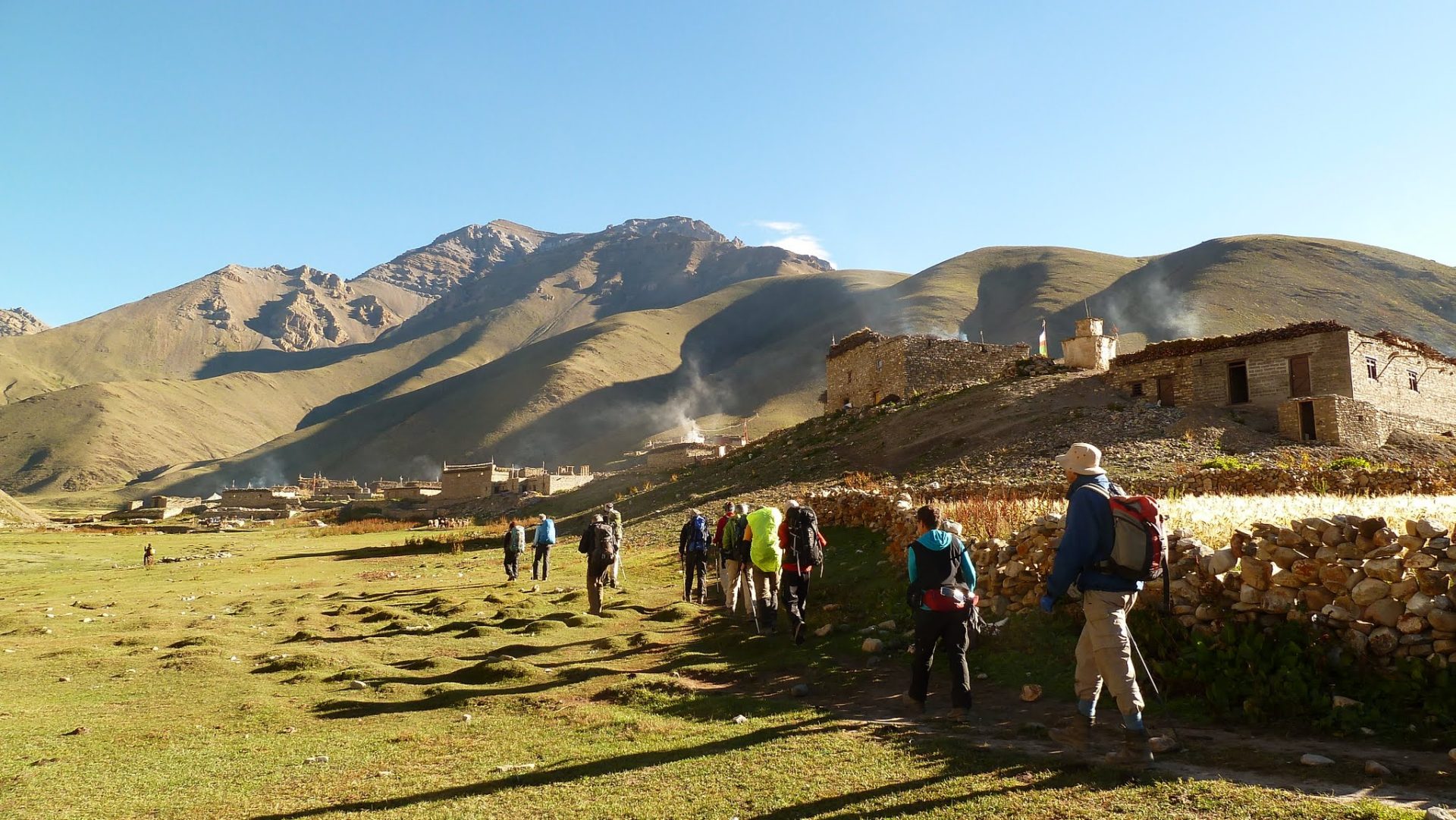
Altitude is one of the most important considerations on a long Himalayan trek.
As elevation increases, the available oxygen pressure decreases. Your body needs time to adjust, and ascending too quickly increases the risk of altitude illness.
Acute mountain sickness (AMS) commonly involves a headache accompanied by symptoms such as nausea, dizziness, fatigue or loss of appetite. Symptoms often begin after arriving at a higher elevation or ascending to a higher sleeping altitude.
More serious conditions include high-altitude cerebral edema (HACE) and high-altitude pulmonary edema (HAPE). These require urgent medical attention.
Recognise warning signs
Do not ignore symptoms simply because you are young, fit or travelling with an experienced group.
Tell your guide if you develop a headache, nausea, unusual fatigue, dizziness or difficulty sleeping after ascending. A normal oxygen-saturation reading does not rule out AMS.
Confusion, difficulty walking straight, unusual drowsiness, breathlessness at rest or a worsening cough are particularly concerning warning signs.
What should you do if symptoms develop?
- Do not continue ascending to a higher sleeping altitude while experiencing symptoms consistent with AMS.
- Inform your guide promptly and arrange an appropriate assessment.
- Follow a conservative plan based on your symptoms, the altitude, the available medical support and professional advice.
- If symptoms worsen, become severe or suggest HACE or HAPE, urgent descent and emergency medical assistance are necessary. Do not leave an affected trekker to descend alone.
Resting at the same altitude may be appropriate for some mild cases, but it is not a universal solution. Worsening symptoms require action rather than simply waiting for another day.
Before travelling, discuss altitude-related risks and any preventive medication with a qualified healthcare professional.
For additional guidance, consult the CDC’s information on high-altitude travel and altitude illness.
6. Travel Insurance and Emergency Evacuation
Travel insurance deserves attention before you leave home, not after something goes wrong.
Many standard policies have restrictions relating to trekking, maximum permitted elevation, mountaineering activities and emergency evacuation. The details vary between insurers, so read the actual policy rather than relying on the phrase “adventure travel insurance.”
For a high-altitude trek, check that your policy explicitly covers:
- Trekking to the maximum elevation planned for your itinerary.
- Emergency helicopter evacuation where medically necessary.
- Hospital treatment and medical transport.
- Repatriation when medically required.
- Trip interruption or cancellation benefits relevant to your circumstances.
Ask the insurer how emergency assistance is activated, whether it must approve an evacuation and whether the policy requires you to pay first and claim reimbursement later.
Do not assume that every helicopter operator will accept a direct guarantee from your insurer. Payment arrangements and authorisation requirements need to be confirmed.
Share your policy details and emergency assistance number with your trekking operator before departure.
7. What If There Is a Family Emergency Back Home?
This is a situation travellers may not want to think about, but it deserves a little preparation.
Imagine that you are ten days into a trek when you receive news that a close family member has died or become critically ill. You may be far from a road, without reliable phone coverage, and several days away from an airport.
The first priority is to establish communication and work out the safest practical way to leave the mountains.
Before the trek
Give a trusted family member a copy of your itinerary, including expected overnight stops and the contact details of your trekking agency.
Ask your operator how emergency messages can reach you if you are outside mobile coverage. For particularly remote routes, discuss whether a satellite messenger or another communication arrangement is appropriate.
Keep your passport, insurance information, emergency contacts and essential travel documents accessible.
It is also sensible to ask your insurer in advance what happens if you need to interrupt a trip because of a death or serious illness in your immediate family.
If the emergency happens
First, contact your guide and trekking operator. Explain the situation and tell them that you need to return home as soon as reasonably possible.
Next, establish your exit options. Depending on your location, this may mean walking back along the trail, reaching a road, arranging ground transport or taking a flight from a suitable local airport.
Contact your insurer. Confirm whether your policy provides trip interruption benefits and whether any emergency transport or flight changes are covered.
Arrange your onward journey. Your agency may be able to assist with domestic transport, international flight changes and the retrieval of luggage stored in Kathmandu.
A helicopter may sometimes be the fastest feasible option, but a family emergency does not automatically qualify for an insured medical evacuation. Charter availability also depends on weather, visibility, landing conditions and other operational factors.
If aircraft cannot operate safely, a ground exit may be necessary. There is no single procedure that fits every trekking region.
The best preparation is to agree on an emergency communication and exit plan with your trekking operator before leaving Kathmandu.
8. When You Can Walk but Do Not Want to Continue
Not every difficult moment on a trek is caused by altitude or physical injury.
After several days of walking, some people feel exhausted, anxious or overwhelmed. A steep climb ahead, several cold nights or the thought of another long walking day may leave them wondering whether they want to continue.
This does not mean they are weak or that their trek has failed.
First, check whether something is wrong
Mental fatigue and physical illness can overlap. Altitude illness, dehydration, inadequate food intake, poor sleep and other medical problems may affect how you feel.
Tell your guide about your symptoms and concerns. Do not assume that a sudden loss of motivation is purely psychological, and do not use a normal pulse-oximeter reading as proof that altitude illness is absent.
Give yourself permission to pause
If there are no concerning medical symptoms and the situation permits, an additional rest period may help. A warm meal, a good night’s sleep and an honest conversation can make a difficult day feel more manageable.
Talk to your guide about the remaining route, the expected walking hours and any particularly challenging sections.
Sometimes it helps to stop thinking about the final destination and focus on the next manageable section of trail.
Accept that turning around is an option
There is no shame in deciding not to continue.
You may choose to rest, take a safer alternative route or return to a lower elevation. Depending on the itinerary, the rest of the group may be able to continue while arrangements are made for you to leave safely.
The decision should take account of your health, the terrain, available support and the practicalities of separating from the group.
Reaching a summit or base camp is an achievement, but recognising your limits is also part of responsible mountain travel.
9. Plan for Weather and Transport Delays
One of the most common planning mistakes is arranging an international flight home too soon after the expected end of a trek.
Mountain weather can disrupt domestic flights, particularly services to and from Lukla. Roads can also be affected by landslides, flooding and other seasonal hazards.
A delay of a day or more is possible, and the consequences may be more significant during unsettled weather.
Where your schedule permits, allow several spare days between your expected return to Kathmandu and your international departure. Three or four days can provide a useful buffer for some itineraries, although no buffer guarantees that every disruption can be accommodated.
Ask your trekking operator about the transport arrangements for your particular route, including any road transfers or alternative flight options.
Keep your airline’s change policy and travel insurance details accessible. If a delay occurs, communicate early rather than waiting until the final day.
10. Food, Hygiene and Daily Comfort
Eating well becomes particularly important when you are walking for several hours every day.
Dal bhat, rice, potatoes, noodles, porridge and other carbohydrate-rich foods can provide useful energy. Include a variety of foods according to your appetite and dietary needs.
You do not need to follow a vegetarian diet simply because you are trekking at altitude. However, food safety matters. Choose freshly prepared, thoroughly cooked meals from establishments that handle and store food appropriately, and be cautious about foods that may have been left unrefrigerated.
Wash your hands with soap and water when available, particularly before eating and after using the toilet. Hand sanitiser can be a useful alternative when washing facilities are unavailable, but it does not replace every aspect of good hygiene.
Carry personal medication, any necessary prescriptions and a small supply of basic first-aid items. Discuss appropriate medical preparation with a healthcare professional before departure.
Teahouse facilities vary. Hot showers, charging points and Wi-Fi may be available for an additional fee, but availability can be limited in remote villages.
A little patience and flexibility make these everyday inconveniences easier to manage.
11. Respect Local Communities and the Mountain Environment
Long-distance trekking offers an opportunity to experience Nepal beyond its mountain scenery.
You may pass Buddhist monasteries, Hindu shrines, traditional settlements, prayer walls and places of everyday village life. Treat these places with respect and follow local guidance about photography, religious ceremonies and appropriate behaviour.
In Buddhist areas, people generally pass stupas, chortens and mani walls clockwise. Follow the local custom and avoid touching or climbing on religious structures.
Support local businesses where practical, ask permission before photographing people and be considerate of the work of guides, porters and lodge staff.
Carry reusable water bottles and take your rubbish with you when appropriate disposal facilities are unavailable. Batteries, wrappers and other non-biodegradable waste should not be left on the trail.
Responsible trekking is not only about protecting the landscape. It also means recognising that mountain villages are living communities, not simply stops along a tourist route.
12. A Final Checklist Before Your Trek
Before leaving Kathmandu, take a few minutes to check the following:
- Your itinerary allows time for appropriate acclimatisation.
- Your boots have been tested and your essential equipment is ready.
- Your insurance covers the activities and maximum elevation planned.
- You understand how to contact your guide and trekking operator.
- You have sufficient cash, personal medication and emergency contacts.
- Your family knows your itinerary and how to reach your operator.
- You understand the risks of altitude illness and the importance of reporting symptoms.
- You have allowed a reasonable buffer before your international departure.
No checklist can eliminate every risk in the Himalaya. Good preparation simply makes it easier to recognise problems early and respond sensibly.
Plan Your Himalayan Journey with Red Reach
A long trek should challenge you in rewarding ways, not leave you feeling that you must follow a fixed plan regardless of the circumstances.
At Red Reach Himalaya, we help travellers plan journeys around their interests, available time, walking experience and preferred level of comfort. Whether you are considering Everest Base Camp, the Annapurna region, Manaslu or another route in Nepal, we can discuss the practical details before you decide.
We believe that a well-planned journey includes realistic walking days, appropriate acclimatisation, clear communication and an honest understanding of the conditions you may encounter. Learn about us.
Tell us what you would like to experience in Nepal. We will help you explore the options and build a journey that suits you. Visit Red Reach Himalaya to learn more or contact our team to discuss your trekking plans.
Safety note: This article provides general travel information, not individual medical advice. Trekking conditions, transport availability and emergency arrangements vary by route and season. Consult a qualified healthcare professional about altitude-related risks and confirm your insurance coverage before departure.