Indra Jatra: The Story Behind Kathmandu’s Great Festival
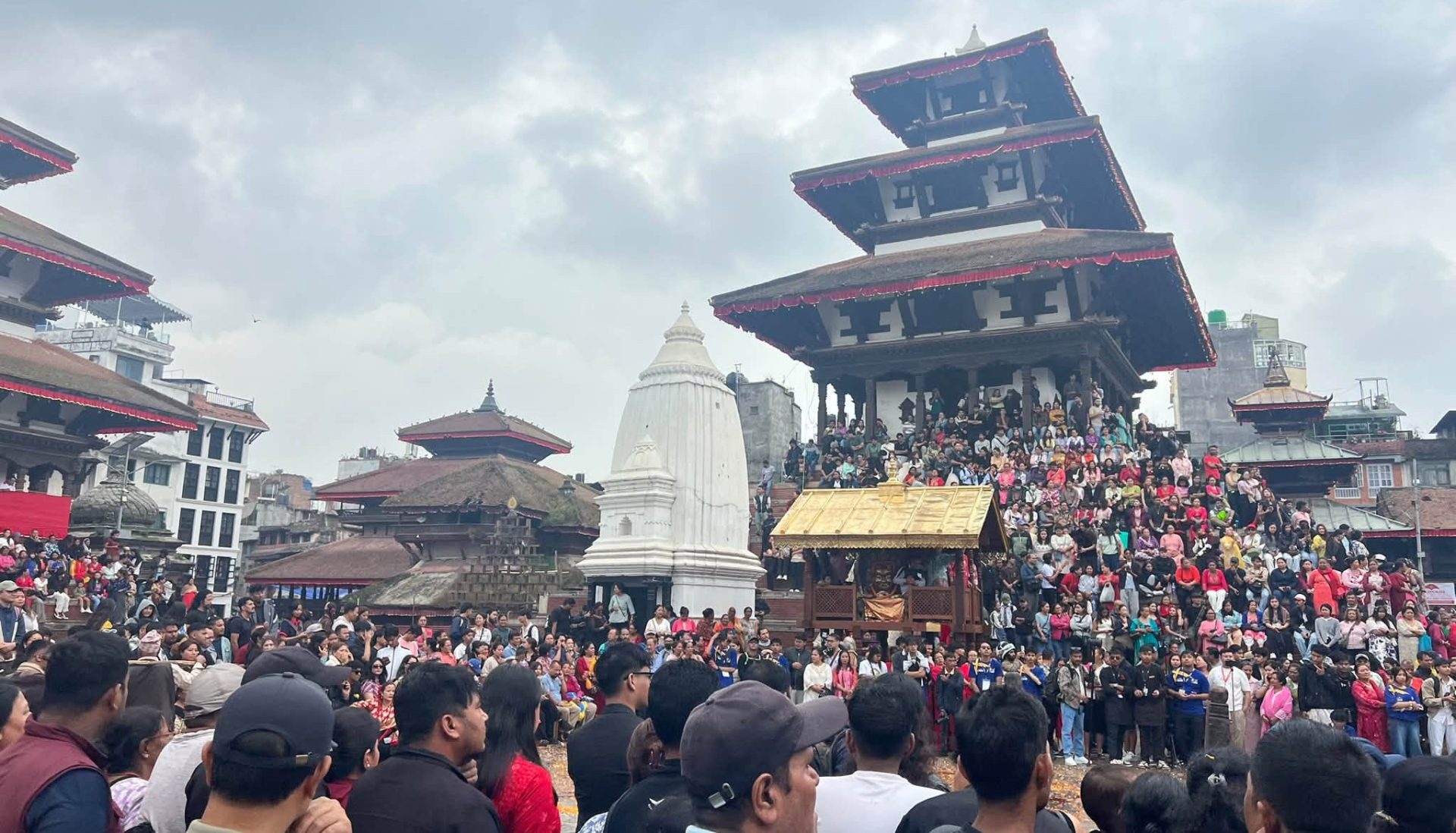
Every year, as the monsoon begins to ease and the rice fields of the Kathmandu Valley turn green, something changes in the old streets of Kathmandu. The drums begin. The ancient courtyards become gathering places. Oil lamps are lit. Masked dancers appear in the streets. Huge images of Bhairav are brought out for people to see. A colourful elephant called Pulukisi moves through the crowds. And thousands of people gather around the old palace square, waiting for the chariots of the Kumari, the Living Goddess of Kathmandu. For visitors, Indra Jatra can look like an extraordinary street festival. For the people of Kathmandu, it is much more than that. Known locally as Yenya, Indra Jatra is a festival of gods and goddesses, rain and harvest, music and masks, family and community. It is also a time to remember those who have died and to pass old traditions from one generation to the next. Most of all, it is part of the story of Kathmandu itself. To understand Indra Jatra, you have to look beyond the crowds and photographs and listen to the old stories.
What is Indra Jatra?
Indra Jatra is an eight-day festival celebrated in Kathmandu, particularly around the historic areas of Kathmandu Durbar Square, Indra Chowk, Asan and the old Newar neighbourhoods. The festival is associated with Indra, the ancient Hindu deity regarded as the king of heaven and traditionally connected with rain and storms. But Indra is only one part of the festival. Over centuries, the celebration has brought together many different traditions: the raising of the Yosin pole, masked dances such as Lakhey, the appearance of Pulukisi, the public display of Bhairav, ceremonies for remembering deceased family members, and the famous chariot procession of the Kumari, Ganesh and Bhairav. The festival has also changed over time. The Kumari procession, for example, is generally associated with the Malla period and is traditionally linked with King Jaya Prakash Malla in the eighteenth century. So today’s Indra Jatra is not a festival created at one particular moment. It is a tradition that has grown together with Kathmandu. That is why the festival feels so deeply connected to the city.
The story of Indra and the flower
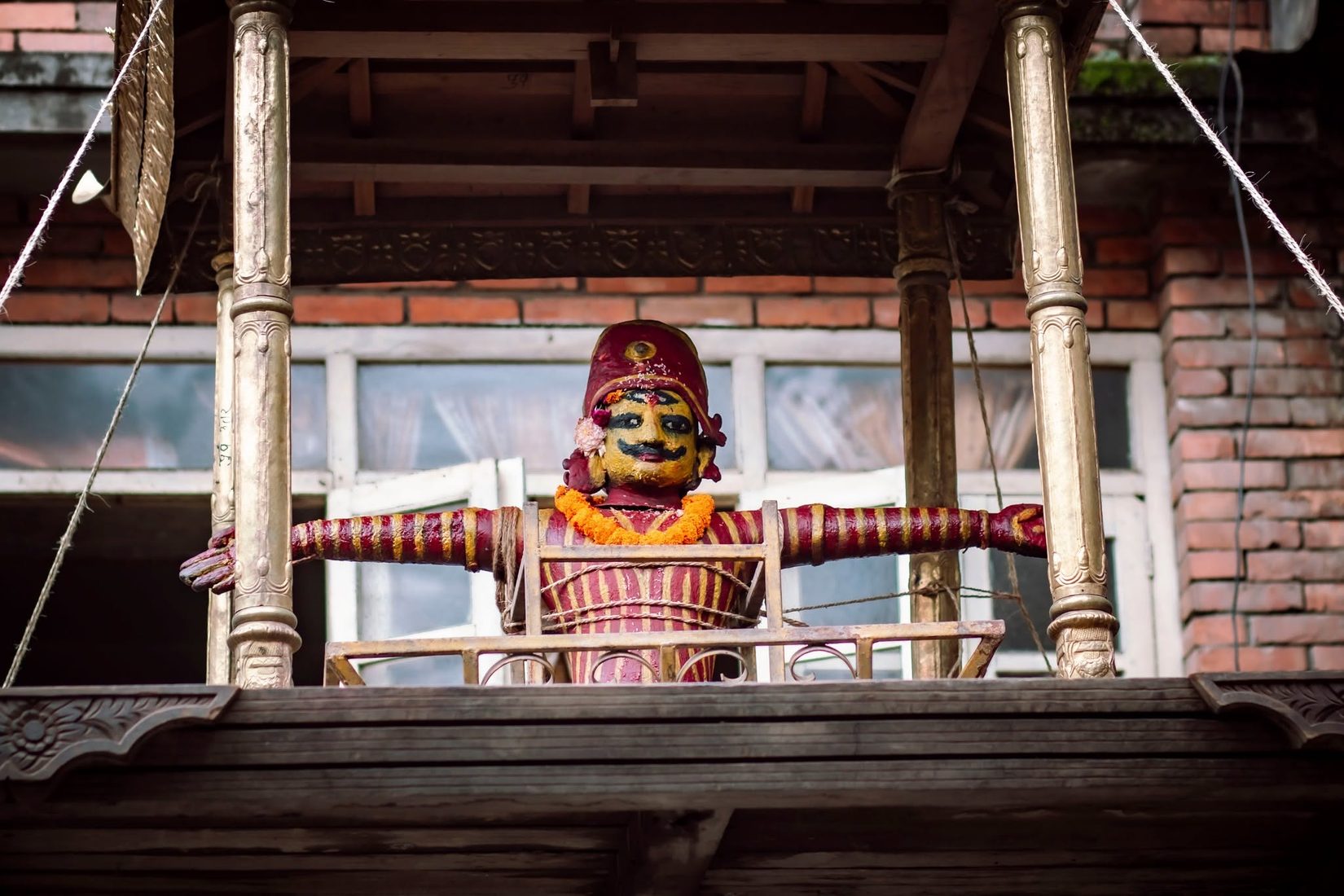
One of the most well-known stories behind Indra Jatra begins with something very small: a flower. According to the traditional legend, Indra came down to earth disguised as an ordinary person. He was looking for parijat, the fragrant night-flowering jasmine, which his mother needed for a ritual. But nobody recognised him as the king of heaven. People saw a stranger taking flowers and believed he was a thief. So they caught him. And they tied him up. There is something almost amusing about the story. A powerful god comes down from heaven and finds himself caught by ordinary people in Kathmandu because he has been taking flowers. The image of the bound Indra is still remembered during the festival. But the story does not end there. When Indra fails to return, his mother, Basundhara, comes looking for him. Her search is also remembered in the traditions of the festival. Eventually, the people realise who they have captured. The supposed thief is Indra himself. He is released, and his mother promises the people moisture and dew for their crops. It is a simple story, but it carries a much deeper meaning.
When rain meant survival
Today, most people in Kathmandu experience the monsoon as part of city life. Rain means wet roads, umbrellas, traffic and sometimes cancelled plans. For the farmers of the old Kathmandu Valley, rain meant something much more important. It meant food. The Valley was once largely an agricultural landscape. Rice cultivation depended heavily on the monsoon. The arrival, amount and timing of rain could affect an entire year’s harvest. So a festival connected with Indra was not simply about worshipping a distant god. It was connected with everyday survival. This is one reason the old stories remain meaningful even though Kathmandu has changed enormously. The Valley is now filled with houses, roads and businesses. Many people no longer work in the fields. But when Indra Jatra arrives, an old agricultural memory returns to the city. The festival reminds us that Kathmandu was once a place where people watched the sky carefully and understood that their lives depended on the seasons.
The Yosin rises in Kathmandu Durbar Square
One of the important ceremonies at the beginning of Indra Jatra is the raising of the Yosin, also known as the Indra Dhwaja. A tall wooden pole is erected at Kathmandu Durbar Square, close to the old Hanuman Dhoka Palace. When the pole rises, the festival has begun. It is difficult to explain what this means simply by describing the ceremony. The significance is partly in the transformation of the city around it. For several days, ordinary Kathmandu and festival Kathmandu exist at the same time. People still go to work. Shops remain open. Traffic tries to move through the old streets. But around them, drums are playing, religious images are being carried, dancers are preparing and families are gathering. The ancient calendar has entered modern Kathmandu. And the old city knows how to make room for it.
Lakhey takes to the streets
Then there are the masks. Perhaps the most famous is the Lakhey, a powerful masked figure who appears during the festival accompanied by traditional music. To someone seeing the Lakhey for the first time, the mask can look frightening. But the Lakhey is not simply there to entertain or scare people. The character belongs to the religious and cultural world of Kathmandu and is traditionally associated with powerful supernatural forces and protection. The dance is part of a tradition that has been passed down through generations. The important thing is that these dances do not take place on a modern theatre stage. They happen in the streets. The same narrow lanes where people walk to work and children play become the stage. A courtyard becomes a sacred space. A procession route becomes part of the ritual. That is one of the things that makes Kathmandu’s festivals so special. The city itself becomes part of the ceremony.
Pulukisi, the elephant looking for Indra
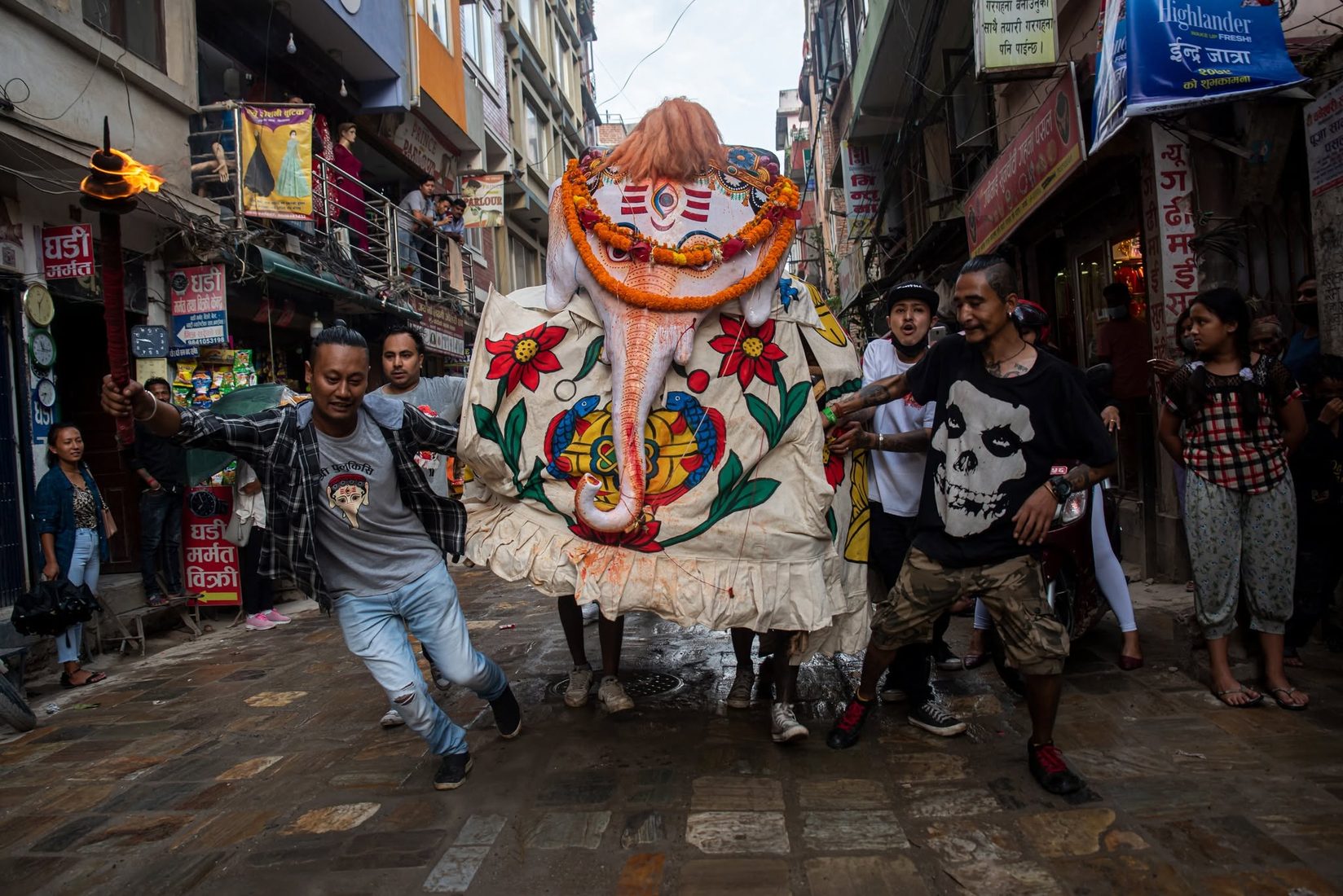
If Lakhey brings an element of mystery and fear, Pulukisi brings plenty of fun. Pulukisi represents Indra’s elephant, searching through the streets for his missing master. The large figure moves through the crowds accompanied by music, creating excitement wherever it goes. Children especially enjoy Pulukisi. But behind the playful character is the same old story: Indra is missing, and those around him are searching for him. This mixture of the sacred and the playful is common in Kathmandu’s festivals. There is no need for everything to be solemn. People pray, make offerings and receive blessings. They also laugh, dance, eat and enjoy themselves. The festival belongs to ordinary life as much as it belongs to the gods.
Bhairav watches over the city
Indra Jatra also brings some of Kathmandu’s most powerful images of Bhairav into public view. Bhairav is a fierce manifestation of Shiva in Hindu tradition and is associated with protection and the destruction of evil. One of the most famous is Sweta Bhairav, whose enormous mask is displayed at Indra Chowk during the festival. For much of the year, these sacred images are not seen in the same way. During Indra Jatra, they come out into public view. People gather around them, make offerings and take part in rituals. The huge masks can be striking for a visitor, but their importance goes beyond their appearance. They are part of the religious life of the city. And they show how Kathmandu’s festivals bring the sacred out from temples and into the middle of everyday life.
A festival that remembers the dead
There is another side of Indra Jatra that visitors can easily overlook. It is also a time for remembering people who have died. During the festival, families take part in traditions associated with honouring deceased relatives. One of these is Upaku Wanegu, when people walk through the old city carrying incense and remembering their departed family members. This can be a quiet and deeply personal part of the festival. Among thousands of people, someone may be thinking about a father who died years ago. Another person may be remembering a mother, a brother, a sister or a friend. The city is celebrating, but families are also remembering. This gives Indra Jatra another dimension. It is not only about gods coming down to the streets. It is also about people remembering those who are no longer here. The past is present in another way.
Then comes the Kumari
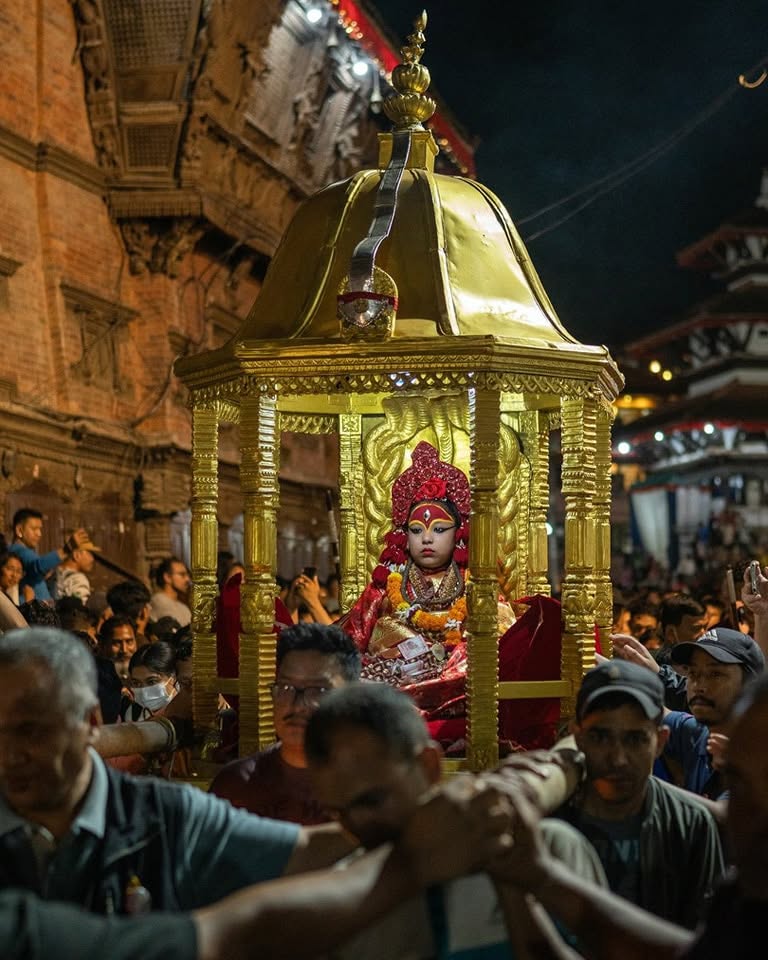
For many people who have never experienced Indra Jatra, the Kumari procession is the image they know best. The Kumari is the Living Goddess of Kathmandu. During the festival, she is carried through the old city in a magnificent wooden chariot. Chariots carrying Ganesh and Bhairav also accompany her. People line the streets to see the procession. Some climb onto balconies and rooftops. Others wait for hours along the route. When the chariot finally appears, the atmosphere changes. People push forward for a better view. Traditional music fills the streets. The ropes are pulled and the great chariot begins to move. For a visitor, it is easy to see this simply as one of the most impressive sights of Indra Jatra. But for local people, the Kumari represents something much deeper. She is part of Kathmandu’s religious identity and its long history. Her public appearance connects the festival with traditions that developed around the old royal city, and the Kumari became closely associated with the Malla kings and Kathmandu’s religious life. Nepal became a republic in 2008 and the monarchy disappeared, but the Kumari tradition continued. The political system changed. The cultural tradition remained. That tells us something about the strength of Kathmandu’s traditions.
Why the chariot matters
The Kumari’s chariot is not simply a vehicle. It represents an enormous amount of traditional knowledge and community work. The chariot has to be built and maintained. Ritual responsibilities have to be followed. Musicians have to play. People have to organise the procession. And then there is the pulling. Hundreds of people can take hold of the ropes. The chariot moves through streets that were not designed for anything like it. There is shouting, music, excitement and sometimes tension as the huge wooden structure moves between buildings and crowds. For a modern city, it can seem almost impossible. But Kathmandu has been doing this for generations. The procession is not a performance created for tourists. It is something the community itself makes happen.
What does Indra Jatra mean to local people?
There is no single answer. For some, it is primarily a religious festival. For others, it is a family tradition. For many Newar communities, it is closely connected with neighbourhood identity, community responsibilities and memories passed down through generations. It is also a time when different groups come together. Someone builds the chariot. Someone plays the drums. Someone knows how a particular ritual must be performed. Someone prepares the traditional food. Someone wears the mask. Someone pulls the rope. Someone explains the story to a child. This is how a living culture survives. Not simply through books or museums, but because people continue to do the things their parents and grandparents did. A child watching the Kumari chariot today may one day bring their own child to the same streets. That is how history becomes personal.
Hindu and Buddhist traditions together
Kathmandu’s religious life has never fitted neatly into separate boxes. Hindu and Buddhist traditions have lived alongside each other in the Valley for centuries, sharing sacred places, festivals and cultural practices. Indra Jatra reflects that history. The festival contains Hindu gods and goddesses, Buddhist Newar communities, local deities, ancestor traditions, masked dances and rituals that have developed over many centuries. Trying to describe it as simply a “Hindu festival” or simply a “Newar festival” can therefore miss some of its richness. It is part of the larger cultural landscape of Kathmandu.
More than something to photograph
Tourism often describes festivals with words such as “colourful,” “vibrant,” “spectacular” and “unforgettable.” Indra Jatra certainly is all of those things. But those words do not tell the whole story. If you come to Kathmandu during Yenya, you will see magnificent masks, chariots, music and crowds. But look beyond the spectacle. Watch an older person explaining something to a child. Notice the families making offerings. Listen to the traditional musicians. Look at the people working behind the scenes. Think about the person beside you who may have been coming to the festival since childhood. For that person, this is not an attraction. It is home. That difference matters. Visitors are welcome, but they are entering a tradition that belongs to the community.
Experiencing Indra Jatra as a traveller
If you are in Kathmandu during Indra Jatra, take time to walk through the old city. Kathmandu Durbar Square is an obvious place to begin, but don’t stay only there. Walk towards Indra Chowk and the surrounding old neighbourhoods. Allow yourself to get a little lost. Listen for the drums. Follow the crowds. Look into the courtyards. You may discover a small ritual taking place away from the main procession. And if you see the Kumari chariot, remember that thousands of people around you are not simply watching. They are participating. Be respectful when taking photographs, particularly during religious ceremonies. Avoid blocking processions or getting in the way of people taking part in rituals. Most importantly, don’t rush. Indra Jatra is not something you understand by taking ten photographs and moving on. Give it time.
Kathmandu remembers
After eight days, the festival ends. The Yosin pole comes down. The chariots return. The masks are put away. The drums become quiet. The crowds disappear from the old streets and Kathmandu returns to its ordinary rhythm. But the tradition does not disappear. The stories remain. The music remains. The knowledge of making the masks and chariots remains. Families continue to remember those who came before them. And children have once again seen what their parents and grandparents have been doing for generations. That is how Indra Jatra has survived. Kathmandu has changed enormously. Kings have disappeared. Governments have changed. Roads and buildings have transformed the city. Modern life has arrived in almost every corner of the Valley. Yet, when Indra Jatra comes, the old city still knows what to do. The drums begin. The gods come out. The chariots move. People gather. And for a few days, Kathmandu remembers itself. Perhaps that is the real meaning of Indra Jatra. It is not only a festival about Indra, rain or the harvest. It is about memory, community, faith and belonging. It is about a city carrying its history forward without putting it behind glass. For travellers, that is what makes Indra Jatra so special. You can photograph the Kumari’s chariot. You can stand beneath the enormous face of Sweta Bhairav. You can watch Lakhey dance through the old streets. You can hear drums echoing between centuries-old buildings. But if you stay a little longer, you may begin to see something beyond the spectacle. You may see a city telling its own story. And perhaps that is the most beautiful thing about Indra Jatra:
Kathmandu does not simply remember its past. For a few days each year, it brings that past into the streets and lives it again. We would love to welcome you to Nepal and have you experience Indra Jatra for yourself. Come and witness the chariots, music, masks and ancient streets of Kathmandu, and perhaps see a little of the living culture behind the festival. If you are planning to visit Nepal around Indra Jatra in 2007, write to us. We would be happy to help you experience the festival in a meaningful and respectful way.