A sacred journey conducted through contested land without the consent of the rightful stakeholder becomes ethically compromised – Spiritual Legitimacy vs Political Violation
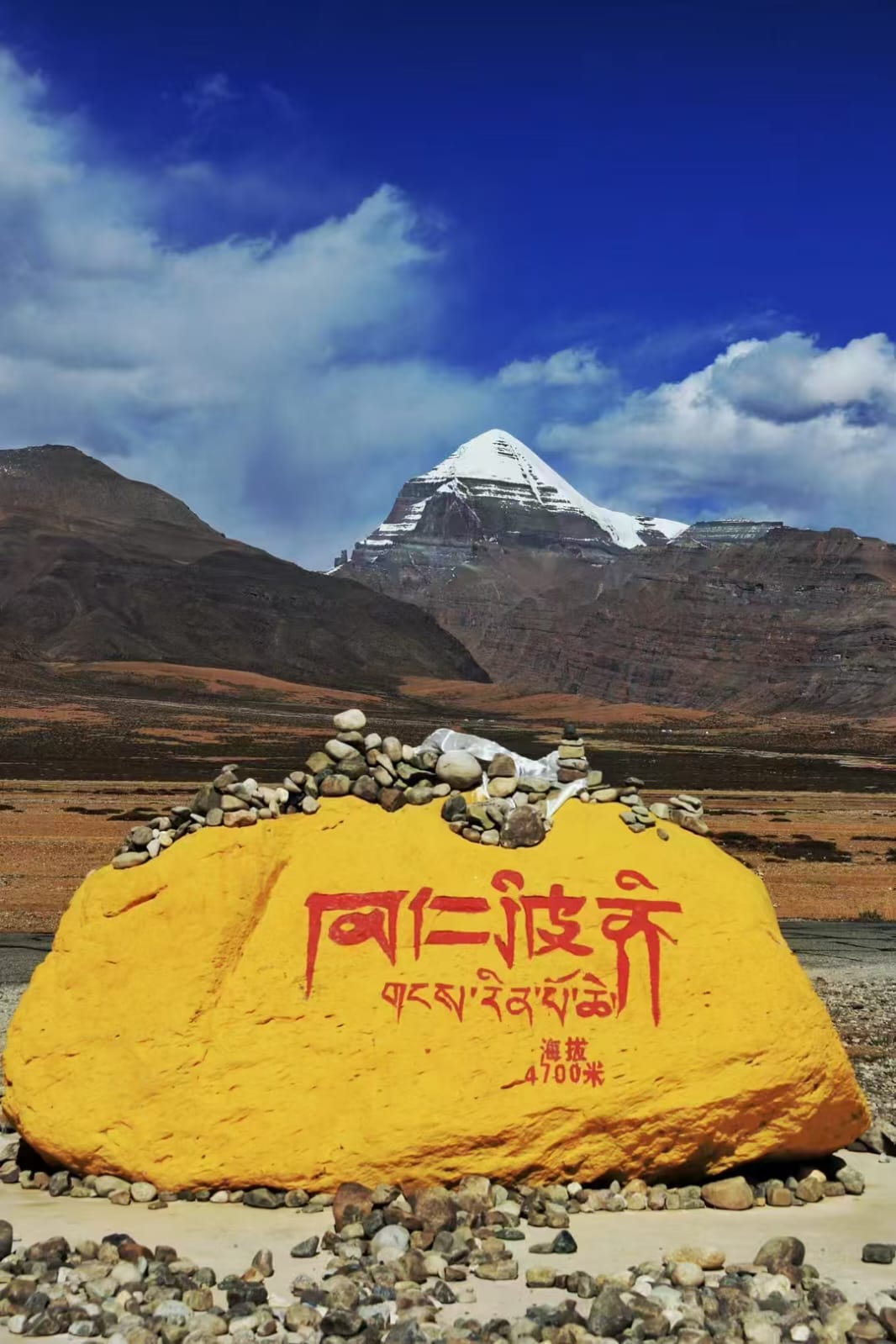
The idea of pilgrimage has always stood at the intersection of faith, humility, and moral responsibility. Across cultures and religions, a pilgrimage is not merely a physical journey, it is a deeply spiritual act meant to purify the mind, reaffirm devotion, and align oneself with higher ethical principles. Few journeys embody this more profoundly than the revered pilgrimage to Mount Kailash and Lake Mansarovar Yatra, collectively known as the Kailash Mansarovar Yatra. For centuries, devotees from Hindu, Buddhist, Jain, and Bon traditions have considered this journey one of the most sacred undertakings in human life.
Yet today, this deeply spiritual journey stands at the center of a troubling contradiction, one that forces us to ask an uncomfortable but necessary question: Can a pilgrimage remain holy when it is entangled in political disregard and territorial injustice?
The Sacred Ideal of Pilgrimage – Spiritual Legitimacy vs Political Violation
At its core, pilgrimage is about more than reaching a destination. It is about the process – the hardships endured, the humility embraced, and the moral discipline practiced along the way. In Hindu philosophy, the concept of dharma – righteousness, duty, and moral order – is inseparable from any spiritual act. A journey undertaken in the name of the divine must itself reflect divine principles.
The Kailash Mansarovar Yatra has long symbolized this ideal. Devotees believe that circumambulating Mount Kailash cleanses one of a lifetime of sins, while bathing in Lake Mansarovar purifies the soul. The journey is not meant to be easy; it is meant to transform. But transformation requires integrity. If the path itself is compromised, can the outcome remain pure?
The Emerging Political Reality – Spiritual Legitimacy vs Political Violation
In recent developments, the reopening and operation of the Kailash Mansarovar Yatra through the Lipulekh Pass has sparked significant controversy. Lipulekh Pass lies in a region claimed by Nepal but administratively controlled by India, with China on the northern side. This tri-junction area has long been disputed, with historical, legal, and cartographic disagreements shaping its status.
What makes the situation particularly concerning is not merely the dispute itself, but the manner in which decisions are being made. India and China have coordinated the reopening and facilitation of the pilgrimage route through Lipulekh—yet Nepal, which claims the territory as its own, has reportedly not been meaningfully included in these decisions. This raises a fundamental issue: How can a sacred journey maintain its moral legitimacy when it proceeds through land whose sovereignty is contested, without the consent of all rightful stakeholders?
Sovereignty and Silence – Spiritual Legitimacy vs Political Violation
Sovereignty is not just a political concept – it is a matter of dignity, identity, and national integrity. For Nepal, the Lipulekh region is not an abstract geopolitical point; it is part of its historical and territorial claim, often linked to interpretations of the Sugauli Treaty. When decisions affecting this land are made without Nepal’s involvement, it creates more than diplomatic tension – it creates ethical dissonance. A pilgrimage that should symbolize unity and spiritual elevation instead becomes a reminder of exclusion and imbalance. Silence in such matters is not neutral. It reflects a hierarchy of power, where larger nations can act unilaterally while smaller nations are expected to react.
The Ethical Contradiction – Spiritual Legitimacy vs Political Violation
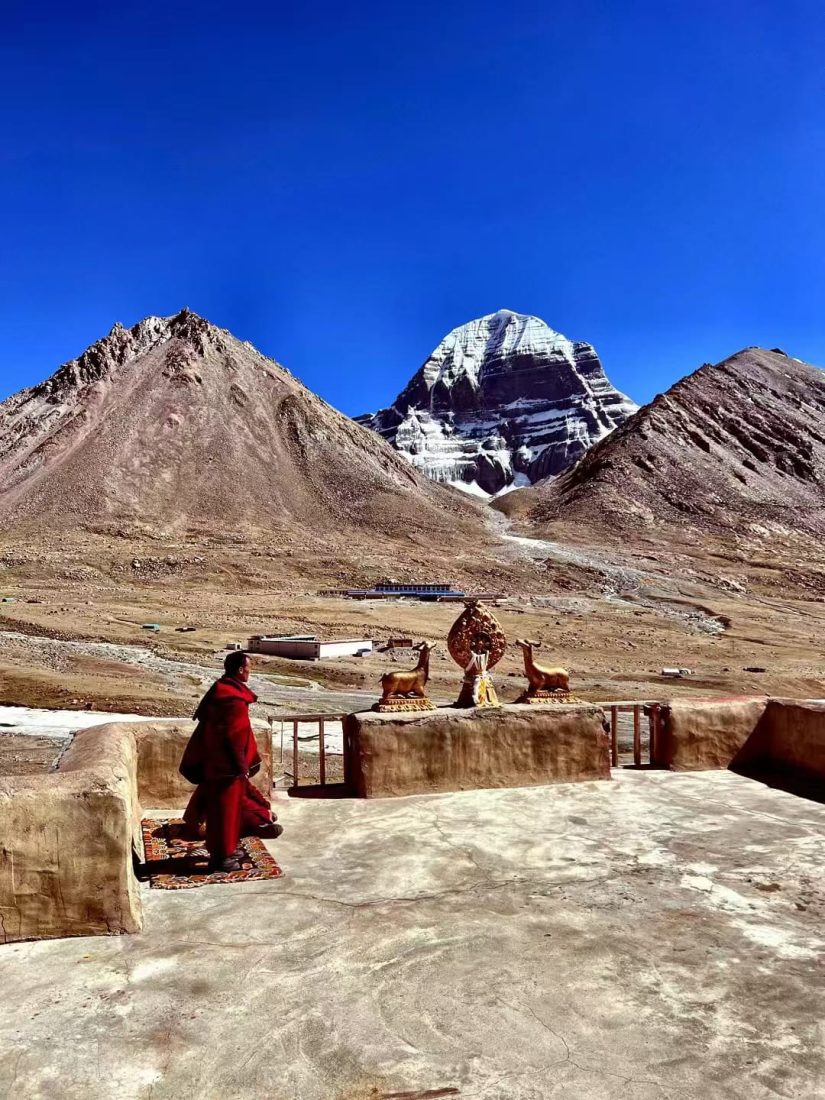
This brings us to the heart of the issue: ethical contradiction. On one hand, the Kailash Mansarovar Yatra represents:
- Devotion
- Purification
- Respect for divine order
On the other hand, its current operation – through disputed territory without inclusive consent – reflects:
- Political dominance
- Diplomatic exclusion
- Disregard for sovereignty
These two realities cannot comfortably coexist. A pilgrimage is not just about intention; it is also about context. If the context involves injustice or imbalance, the act itself becomes morally complicated. The journey may still hold personal meaning for individual pilgrims, but its broader legitimacy becomes questionable.
Dharma vs. Realpolitik – Spiritual Legitimacy vs Political Violation
In South Asian philosophical traditions, dharma is not optional – it is foundational. It governs not only personal conduct but also governance, relationships, and collective actions. Acting in accordance with dharma means upholding fairness, respect, and truth. In contrast, modern geopolitics often operates on realpolitik – the pursuit of power and strategic advantage, sometimes at the expense of ethical considerations. The situation surrounding the Kailash Mansarovar Yatra appears to reflect a clash between these two frameworks:
- Dharma would require inclusive dialogue, mutual respect, and acknowledgment of all claims.
- Realpolitik prioritizes access, control, and bilateral agreements between powerful actors.
When a sacred journey becomes shaped by realpolitik rather than dharma, its spiritual foundation is inevitably shaken.
The Role of Power and Imbalance
It is impossible to ignore the power dynamics at play. India and China are two of the largest and most influential nations in Asia, with significant economic, political, and strategic weight. Nepal, by comparison, is smaller and often finds itself navigating complex relationships with both neighbors. This imbalance creates a situation where:
- Decisions can be made without equal participation
- Objections may be acknowledged but not fully addressed
- Sacred spaces risk becoming instruments of geopolitical strategy
The concern is not merely about one route or one pilgrimage. It is about a broader pattern where smaller nations’ voices can be overshadowed in matters that directly affect them.
From Sacred Journey to Strategic Corridor – Spiritual Legitimacy vs Political Violation
Another dimension worth examining is the gradual transformation of pilgrimage routes into strategic corridors. Infrastructure development, border access, trade facilitation, and tourism all intersect in regions like Lipulekh.
While development is not inherently negative, it can blur the line between:
- Spiritual pathways
- Economic routes
- Strategic assets
The Kailash Mansarovar Yatra, once defined by hardship and spiritual discipline, is increasingly influenced by logistical efficiency, governmental control, and geopolitical considerations.
This shift raises an important question:
Is the pilgrimage still a spiritual journey, or is it becoming a managed experience shaped by state interests?
The Voice of Faith vs. the Reality of Politics
For millions of devotees, the Kailash Mansarovar Yatra remains deeply sacred, regardless of political context. Faith, after all, is personal and often transcends external realities.
However, institutions and governments do not operate on faith alone—they operate on decisions, agreements, and policies. When those decisions overlook ethical considerations, they create a disconnect between the spirit of the pilgrimage and the structure supporting it. This disconnect does not invalidate individual devotion, but it does challenge the collective integrity of the pilgrimage.
Reclaiming Ethical Ground
If the sanctity of the Kailash Mansarovar Yatra is to be preserved, it must be grounded not only in faith but also in fairness. This means:
- Recognizing all territorial claims with seriousness and respect
- Ensuring inclusive dialogue among all affected nations
- Separating spiritual purpose from strategic maneuvering
- Upholding the principle that sacred journeys should not come at the cost of justice
Holiness is not just about where one goes – it is about how one gets there.
A Question That Cannot Be Ignored
The issue ultimately comes down to a simple yet profound question:
Can a pilgrimage remain holy if it is conducted through a process that excludes, marginalizes, or disregards rightful stakeholders?
There is no easy answer. For some, faith will remain untouched by politics. For others, the ethical context will matter deeply.
But the question itself is important—because it forces us to examine not just what we believe, but how we act on those beliefs.
Conclusion: Beyond the Journey – Spiritual Legitimacy vs Political Violation
The Mount Kailash Mansarovar Yatra has stood for centuries as a symbol of spiritual aspiration. It has inspired devotion, sacrifice, and transformation across generations.
Yet today, it also stands as a reflection of our times—where ancient traditions intersect with modern geopolitics, and where sacred ideals are tested by political realities.
To preserve the true essence of this pilgrimage, it is not enough to maintain the route or facilitate access. What must be preserved is the integrity of the journey itself. A sacred path cannot be built on ethical compromise. A holy journey cannot ignore justice. If spirituality is to remain meaningful, it must be aligned with fairness, respect, and truth – not only in belief, but in practice. Only then can a pilgrimage truly be called holy.
If you want to experience Holy Mt. Kailash Yatra from Nepal side – write to us. We make your journey memorable and affordable.!