Nepal Gen Z Protest Killings and 2026 Election: What Happened and What’s at Stake
Nepal is heading to the polls on 5 March 2026 in a general election shaped by one of the most dramatic events in its recent history – the deadly Gen Z protests of September 2025.
A BBC Eye investigation has revealed that an order allowing the use of lethal force against unarmed demonstrators was issued by Nepal’s former police chief, Chandra Kuber Khapung. The shootings left 19 people dead in Kathmandu, including 17-year-old Shreeyam Chaulagain, who was shot while walking away from the protest in his school uniform. The events triggered nationwide unrest and led to the resignation of former Prime Minister KP Sharma Oli. As voters prepare to elect a new government, the legacy of those protests continues to influence political debate.
What Sparked the Gen Z Protests? – Nepal Gen Z Protest Killings and 2026 Election
Nepal became a republic in 2008 after a decade-long civil war. The 2015 constitution promised political stability and economic opportunity. However, many young Nepalis say corruption, unemployment and slow economic growth have undermined those expectations.
By 2025, frustration was especially strong among Generation Z – citizens aged roughly 14 to 29. Online discussions about political nepotism intensified in August 2025, with activists using terms like “nepo baby” to criticise political elites. On 4 September 2025, the government imposed a ban on major social media platforms including Facebook, YouTube, Instagram and X. Activists then moved to the chat platform Discord, where groups such as “Youth Against Corruption” organised a rally outside parliament in Kathmandu.
8 September: The Day of the Shootings
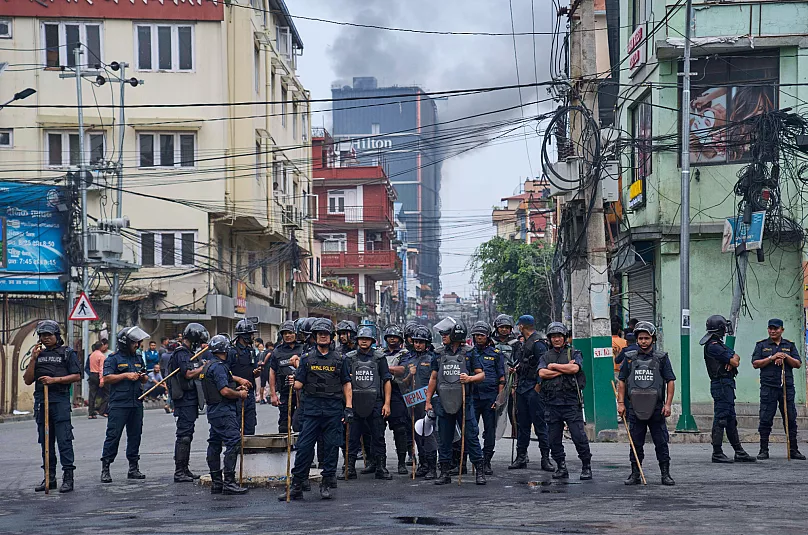
On the morning of 8 September, thousands of young protesters gathered at Maitighar Mandala, a traditional protest site in Kathmandu. Many participants wore school uniforms and carried black flags. Organisers described the rally as peaceful.
As the crowd grew, authorities imposed a curfew.
According to a leaked internal police document reviewed by BBC investigators, a commander using the call sign “Peter 1” authorised officers to “deploy necessary force” shortly after the curfew began. Sources identified “Peter 1” as then-Inspector General of Police Chandra Kuber Khapung.
Nepal Police has stated that the order was issued only after authorisation from a government security committee and after other crowd-control measures had been exhausted, in line with Nepali law.
Video evidence analysed by the BBC, including more than 4,000 videos and photographs, indicates that several victims were unarmed. Among them was Shreeyam Chaulagain, the youngest of the 19 killed in Kathmandu that day. The shootings led to wider unrest across the country. According to authorities, 77 people died during the broader wave of violence, and several government buildings were set on fire.
Political Consequences – Nepal Gen Z Protest Killings and 2026 Election
Public anger intensified following the shootings. Within 24 hours, Prime Minister KP Sharma Oli resigned, and the government collapsed.
An interim administration led by former chief justice Sushila Karki was appointed with a mandate to hold fresh elections within six months. A public inquiry into the 8 September events is ongoing. So far, no individual has been held accountable.
Nepal’s 2026 General Election – Nepal Gen Z Protest Killings and 2026 Election
On 5 March 2026, nearly 19 million Nepalis – including around 800,000 first-time voters – will vote to elect 275 members of the House of Representatives as per Nepal Election Commission.
Nepal uses a mixed electoral system:
- 165 seats are decided by First Past The Post (FPTP)
- 110 seats are allocated through Proportional Representation (PR)
More than 3,400 candidates are contesting the election, with over 1,000 under the age of 40 — reflecting growing youth participation.
Several political figures are drawing attention:
- Balendra Shah, widely known as Balen, is contesting against KP Sharma Oli in Jhapa 5.
- The Nepali Congress, led by Gagan Thapa, is campaigning on governance reform.
- The Communist Party of Nepal (UML), previously led by Oli, remains a major force.
Key campaign issues include corruption, unemployment, governance reform and economic recovery — themes that closely mirror the grievances expressed during the Gen Z protests.
Broader Implications – Nepal Gen Z Protest Killings and 2026 Election
The election also has geopolitical significance. Nepal maintains important relationships with India, China and the United States. Political leadership in Kathmandu often influences regional alignments, including cooperation under China’s Belt and Road Initiative and economic ties with India.
Domestically, the vote is seen as a test of democratic resilience in a republic that is less than two decades old. The September 2025 protests demonstrated the political influence of youth mobilisation, particularly when organised through digital platforms. Whether that momentum translates into long-term political change remains uncertain.
A Turning Point for Nepal – Nepal Gen Z Protest Killings and 2026 Election
The Gen Z protest killings of September 2025 marked one of the most consequential moments in Nepal’s recent democratic history. A police order led to lethal force against unarmed demonstrators. Nineteen people died in Kathmandu alone. A government fell.
As voters prepare to cast ballots on 5 March 2026, the memory of those events continues to shape public debate. The outcome of this election may determine not only the direction of Nepal’s governance but also how the country addresses demands for accountability, transparency and economic opportunity raised by its younger generation.
If you are visiting Nepal for trekking and exploration during this time of year, Red Reach Himalaya Trek would be honored to be your trusted host and travel partner. From the majestic Himalayas to rich cultural heritage, we ensure a safe, personalized, and unforgettable journey in Nepal.